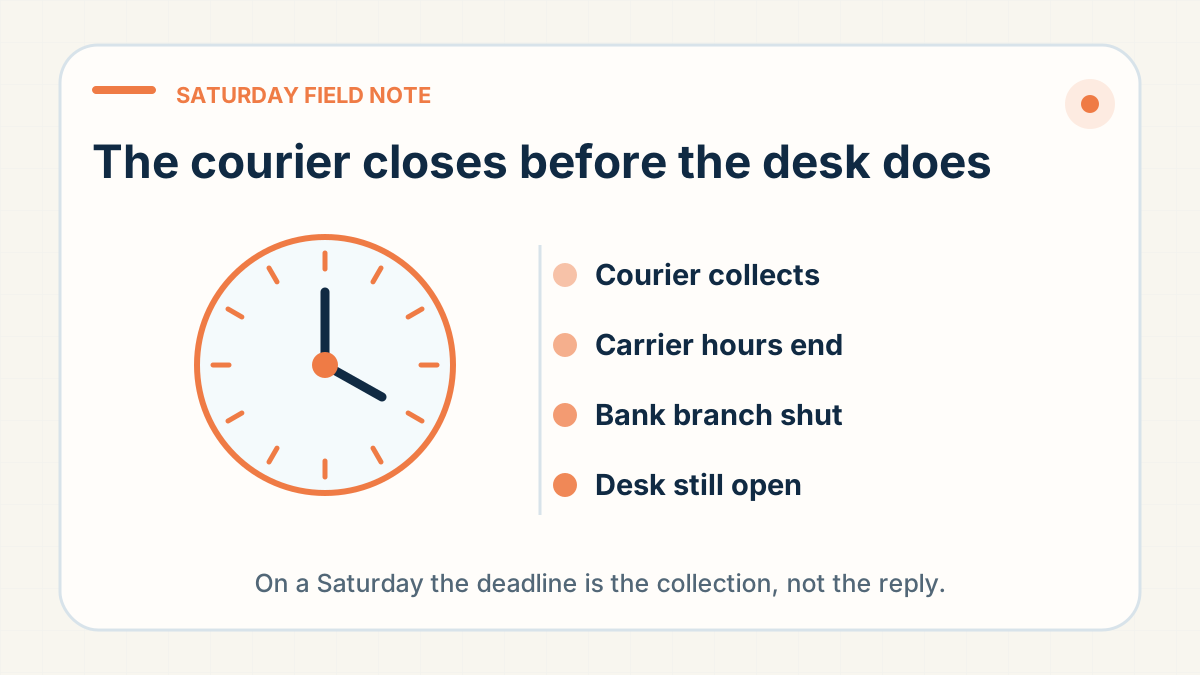
Field note
The desk was still answering long after the courier had gone
Put the courier's collection time, weekday and weekend, in your cut-off table, because it is the real deadline for a change. This Saturday ran at weekday volume. Quotes, invoices, holds, address corrections and reships were handled through the afternoon and well into the night. Almost everything downstream of the desk had stopped much earlier. The courier made its one collection and left, destination carriers kept short weekend hours, and one seller's own bank branch was shut. The failure mode all day was not silence. It was a true answer arriving after the gate it depended on had already closed.
Our FAQ answers whether we work at weekends and why a quote can wait until Monday.
The deadline is the collection, not the reply
A quality check that morning flagged one item in a batch, and the warehouse held it pending the seller's decision. The question stayed open through the afternoon. Late in the day the warehouse chased again, this time saying the courier was expected shortly and anything still undecided would move to the next working day. The seller answered within the hour. The collection had already gone. Hours of decision time had existed, and only the last part of it was ever named as a deadline.
The same shape appeared in the evening, when a delivery reached the warehouse after that day's pickup had run. Two other slips were chosen rather than missed: fragile goods were held a working day while their protective packing was designed, and a shut bank branch pushed a seller's transfer, and the purchase it funded, to the next banking day. A slip named in advance is a plan. The same slip named afterwards is an apology.
A courier collects once a day, and that collection, not how fast the desk replies, is what ends a shipping day. There is no guaranteed same-day cut-off to hold anyone to; there is only that day's collection. Ask your fulfilment partner when it happens, then write the weekend row into your own order change and cancellation cut-offs instead of inferring one.
A Saturday tracking number is a record, not a movement
Several parcels dispatched that Saturday had a reference before they had a scan. That is normal and it is not dishonest, but it is easy to misread. A number issued while the network is quiet records that a parcel is expected, not that anything has moved, and the first scan on a weekend dispatch often lands on Monday. One seller asked why a Saturday tracking number showed nothing and was told, correctly, that last-mile information would not appear until Monday — an answer that would have cost nothing at dispatch and had to be chased instead.
The gap is invisible at the desk and expensive at the storefront, where the seller's own customer refreshes a still page all weekend. It is the same trap as label created isn't the same as shipped. Send the day of the expected first scan with the number, not the number on its own.
The Saturday homework a seller can actually clear
Not everything that stalls at the weekend needs a factory. One consolidated list of blocked orders went out minutes after the invoice, before anyone asked for it. Most of it was stock the factory could not move before Monday. The rest were data faults: a postcode to confirm, a missing tax identification number needed for clearance, an address with no house number. Those belong to the seller and their customer, and a weekend is a good time to clear them.
Split any weekend exception list in two before Monday: what a factory owns, and what your own order records own. The second half is usually the half that is still moving, and an address fault left to harden becomes a failed delivery two weeks later.
Put the collection in your cut-off table
Ask your fulfilment partner what time the courier collects, on a normal day and at the weekend, and put both in the same table as your own order-change deadlines. That single row converts every weekend instruction from a hope into a timed one, because it tells you which hour a hold, a correction or a quality answer actually has to land by. Everything after that hour is Monday's work, and saying so on Saturday is cheaper than discovering it on Tuesday.