Field note
What was happening
Several sellers were moving from a product idea or occasional manual order into a repeatable store workflow. Their questions covered order syncing, variant names, delivery messages and what should happen when an address changes or a customer reports a problem. The underlying issue was not the connection itself; it was whether everyone would read the same order and product rules once orders began moving quickly.
A store connection is not the whole workflow
Seller calls this week made clear that a store integration is useful only when the operating decisions around it are also understood. Dianxiaomi can support RyanFulfil's internal order-management flow, while order data, product variants, dispatch timing, customer updates and exception handling still need a shared interpretation. Technology can reduce repeated work, but it cannot decide which version is approved or what delivery promise is safe to make.
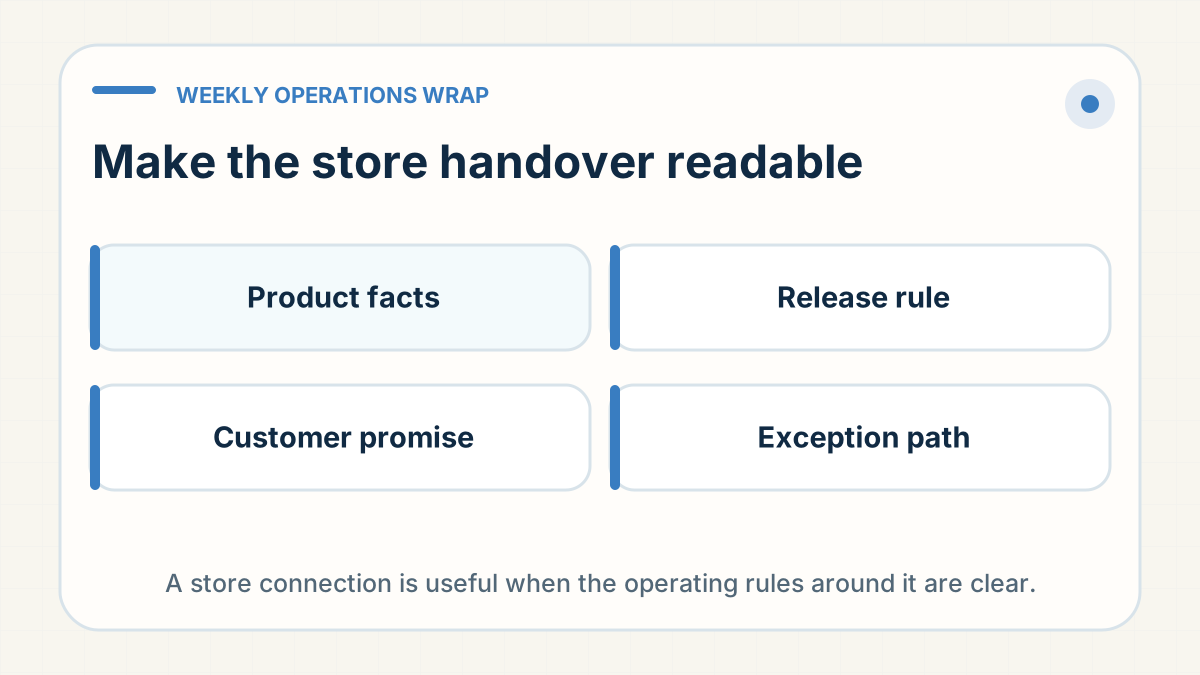
Make the handover readable
The practical improvement is a brief that a seller and operations team can both use: what is being sold in broad terms, which details are non-negotiable, what needs checking before release, and how an exception will be communicated. This is especially important when a business is moving from product exploration into its first repeatable fulfilment process.
Feedback needs a closed loop
Follow-up conversations are most useful when they do more than collect a complaint or a wish list. They should produce a concise summary, identify what needs review, name the next owner and explain what will be checked. That is how a service issue, a sourcing request or a stock decision becomes a recoverable operational task instead of another unresolved chat thread.
A forecast is not inventory demand yet
Campaign plans and expected order volumes are useful inputs, but they are not paid demand. Before reserving stock or moving to bulk production, the operation still needs a confirmed variant, sample standard, store workflow, funding decision and replenishment plan. That prevents an optimistic forecast from becoming dead stock.
Tracking has distinct operational states
A generated number, a platform status, physical carrier collection and a visible first scan are not the same event. The handover should define which milestone triggers the customer update and which number the marketplace can actually recognise, especially when a parcel changes to a local carrier later in the journey.
The takeaway for sellers
Before connecting a store or sending stock, write down the product facts, the release rule and the customer-facing promise. That small document gives every later conversation a reliable starting point.