Field note
A first promise met an old exception queue
One seller serving a European market reached the first paid-order stage this week. That is a small number on a dashboard and a large change operationally: a product idea has become a promise to a real recipient. On the same day, established accounts were dealing with parcels showing failed delivery, self-pickup, incomplete-address or stalled-handoff states across Europe and Japan.
Those older exceptions gave the first-order celebration its missing context. The work after a sale is not one status called shipped. It is a chain of product confirmation, address checks, carrier acceptance, last-mile contact and evidence if the chain breaks.
One order can carry the whole store's reputation
For the new seller, an early delivery problem could define the customer's entire opinion of the store. For the mature accounts, mixing dozens of exceptions into ordinary dispatch messages made it easier to miss a pickup deadline or ask for the same address twice. Momentum and control had to exist together.
Protect the first shipment and triage the rest
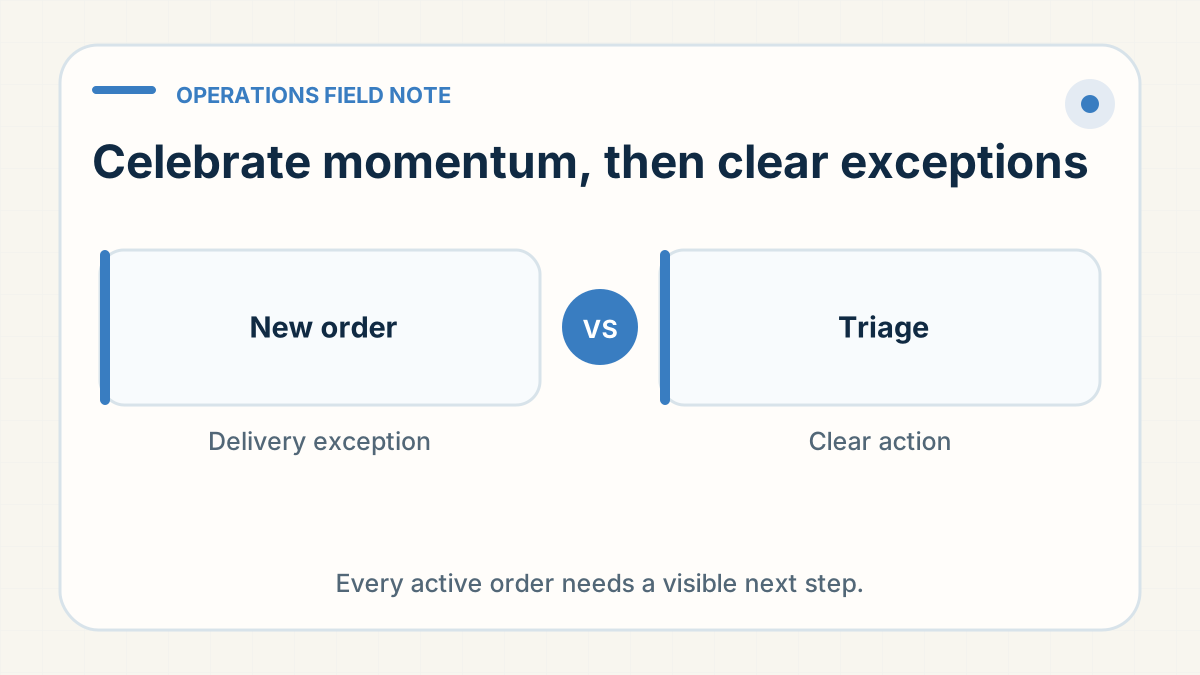
An early sale is worth celebrating, but it also starts a customer promise that needs the same operational care as every later order—whether the seller is testing a simple lifestyle product or beginning a broader range.
At the same time, delivery exceptions need a separate, evidence-led queue rather than being mixed into ordinary dispatch work.
Keep milestones visible: confirm what has moved, what needs follow-up, and when the next customer update is due.
Every delivery left with an owned next check
The first order moved forward with its milestones visible. Existing delivery cases were separated by physical state and next actor instead of being described generically as delayed. The day ended with two kinds of progress: one seller had begun trading, and the support queue had become something another operator could continue without rereading every chat.