From the operations archive
The familiar logo was not the safer choice
A seller comparing routes to several countries began with the names everyone recognised. The instinct made sense: a global carrier appears easier to explain to customers and feels less risky than a specialist line. Yet one destination was remote, the packed item sat awkwardly against a service rule, and the final-mile handoff mattered more than the logo on the export label.
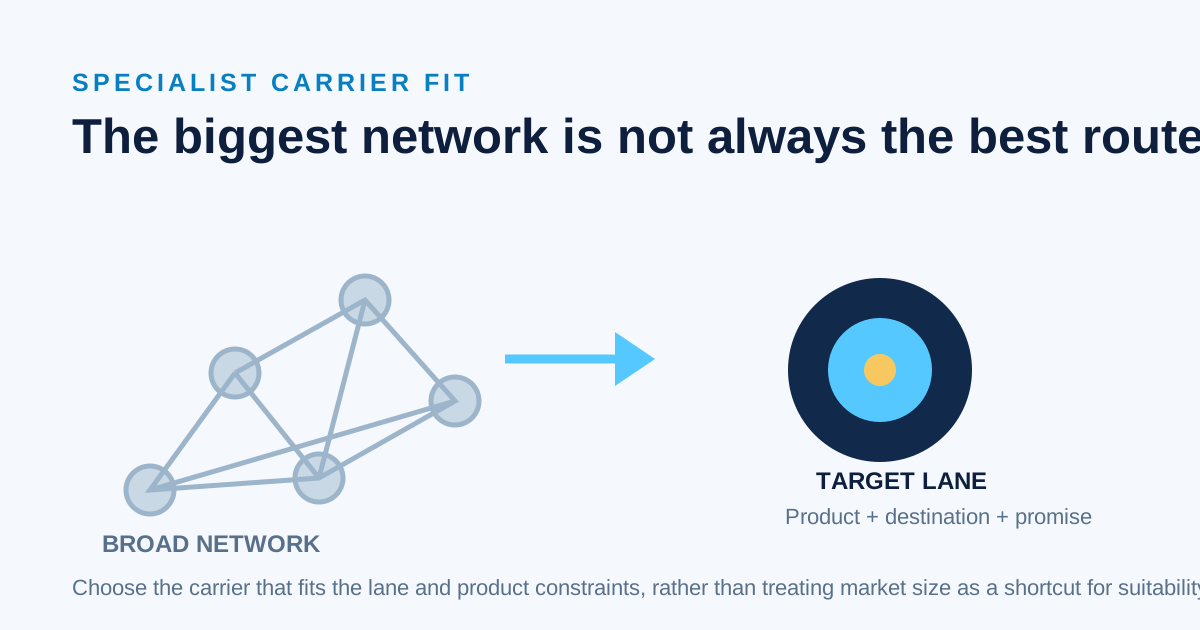
The decision was not “large carrier or unknown carrier.” It was whether the parcel would be accepted in its real packed form, reach that postcode, produce usable tracking at each handoff and arrive within a promise the store could defend. The famous option was strong on familiarity but weak on the particular combination. A specialist route offered a narrower service with a better operational fit.
The team chose from the lane backwards: item, destination, service, handoffs and exception process. That changed the answer without claiming the specialist was universally better. A smaller network wins when its specific route removes a real constraint; it loses when the fit changes. Carrier size is a comfort signal, not a substitute for checking the shipment in front of you.
About this story: it is an anonymised composite of client situations. It broadens markets and product families and leaves out identifying details. Read the dated field note: The value of a clear route check.
The largest China-to-world parcel carriers move enormous volume and dominate the market by scale. That scale is genuinely useful, broad coverage, established infrastructure, deep integrations. It doesn't automatically mean the biggest carrier is the right choice for every single shipment, and smaller, more specialized carriers can genuinely win in specific niches the giants don't optimize for.
What the giants are actually good at
Massive daily parcel volume, broad country coverage, established last-mile partnerships across most major markets, and generally the most mature tracking and claims infrastructure in the industry. If you need a generalist option that works reasonably well almost everywhere, the largest carriers are a safe, well-tested default.
Where a specialist like WANB can actually win
1. Specific regional infrastructure the giants haven't built out identically, verified UK bonded-warehouse status being a concrete example. 2. Category-specific pricing advantages, like an apparel line that skips volumetric weight, that a generalist carrier's standard rate structure doesn't offer. 3. Responsiveness on complaints and support, smaller operators sometimes engage more directly with individual issues than a carrier processing a much larger volume.
Where the giants still generally have the edge
1. Overall tracking depth and consistency across the widest range of destinations. 2. Claims processes and compensation terms, which tend to be more developed at greater scale. 3. Sheer breadth of coverage, if you're shipping to a genuinely unusual destination, a bigger carrier is more likely to have an established route.
How we actually decide between them
We don't treat "biggest carrier" as automatically "best carrier" for a given shipment. We look at the specific product, the destination, and what actually matters for that order, speed, cost, category fit, compensation coverage, and pick whichever carrier's specific product line, giant or specialist, genuinely fits best. Sometimes that's the household name. Sometimes it's a smaller operator doing one specific thing better.
If you want an honest comparison for a specific product and destination rather than a generic "which carrier is best" answer, tell us the details and we'll walk through it.
The rule: Use the specialist only for the lane it can prove. Compare a representative parcel on product acceptance, coverage, delivery milestones, exceptions and total cost; a familiar global logo and a specialist network are both poor shortcuts for route-level evidence.
Need one order or route checked?
Worried about an order's tracking? Send us the order number on WhatsApp (wa.link/dropship) and we'll check what's going on.
Check Order on WhatsApp →