Field note
Right data, missing verdict
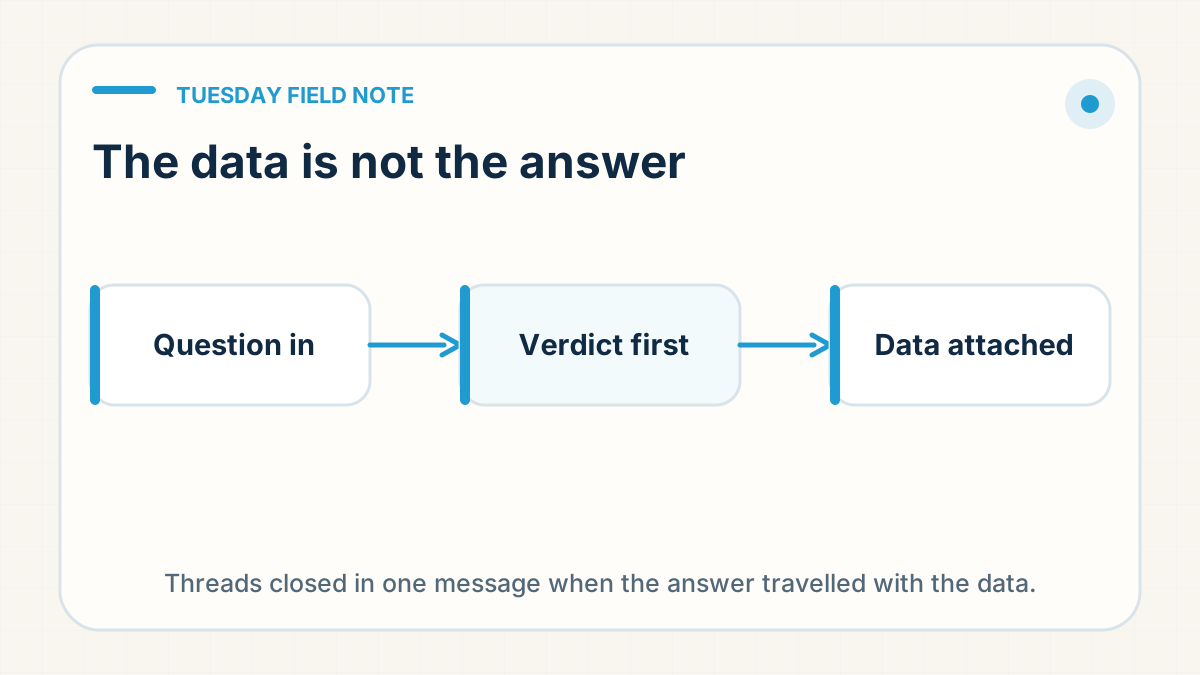
Put the verdict or the action in the first line of a reply, and send the data underneath it, never instead of it. Tuesday was the second-heaviest day of the window, and one pattern ran through sourcing, quoting and tracking alike. The desk kept sending the raw material — carrier contact cards for held parcels, quotes for near-match products, whatever certificates a factory happened to hold — and left the reader to work out what it meant. Where the meaning travelled with the data, threads closed in one message. Where it did not, every reply bought another round of questions, and in one case it cost the deal.
A carrier contact card is not an instruction
Held-parcel and self-collection notices were the day's highest-volume relay — a handful of held parcels a day across several European lanes, with the UK and Japan alongside. In one long-running EU thread, a seller received batches of carrier phone numbers, emails and opening hours, and came back on separate days with the same three questions: is something wrong, do I have to call the carrier, does my customer need a code to collect?
The information was correct every time; the format failed every time. He was not being slow — the notices simply never said what to do. The thread only settled once the notice led with the instruction "these are self-pickup parcels — tell your customer to collect with this tracking number" and pushed the contact details to second place.
The control group sat in the same log. A thread covering the UK and Australia led every held-parcel notice with that action line and produced no confusion at all, and a delivered-but-not-received dispute in Japan ended in one message because the reply was a ready-to-forward pack: carrier name, phone, portal, opening hours and the sentence telling the customer what to do with them. A failed delivery is a decision point, not a directory entry; what happens after a failed delivery sets out the collection windows and resend options that action line should point at.
Label the substitute before the client finds it
The same day produced both endings of the similar-product story. A German prospect asked for a premium audio accessory and got a quote for a cheap foam lookalike with no flag on the difference. He recognised the mismatch instantly, mocked the quote and left. The sourcing itself was honest — a near match was genuinely all that could be found — but because nobody said so, the quote read as either incompetence or a scam. Nothing in the thread recovered it.
Every labelled version of the same move worked. Quotes into Belgium, Switzerland, the United States and Pakistan carried the line "only a similar product was found" and kept their threads alive. A heavy-glassware quote labelled similar-only was declined as unviable, and both sides parted on good terms — the best available outcome for an unviable product. One thread admitted a bag was likely a custom item rather than quietly substituting; another sent a photo of the closest colour match and asked for a yes or no before quoting anything. The label costs one sentence; a safe substitution process shows how to write it before the client discovers the gap.
A compliance question deserves a verdict, not a document dump
Compliance and intellectual-property questions split the same way. The clean verdicts were fast: a trademark-protected wellness device was flagged during sourcing — infringement risk, no shipping channel, a custom-logo alternative behind a large minimum order; a branded-looking fragrance holder was steered to a non-branded alternative; and a regulated-goods enquiry received a firm, polite no the same day, unmoved even when the prospect turned insulting. Each verdict landed in the first reply, with the reasoning underneath.
The muddled threads withheld the verdict. In the day's pooled pattern, a lookalike request drew the right warning at intake but the definitive no arrived only after hours of engagement with models and colours that the refusal then wasted, and a seller who asked whether an appliance was compliant to sell in Australia received the certificates the factory happened to hold — while the actual question, whether the product meets the destination's mark requirement and whose determination that is, was never answered. An eligibility question has exactly three honest answers: yes, no, or unknown together with whose call it is. The verdict belongs above the paperwork; what a fulfilment agent can ship draws the brand and lookalike lines that verdict rests on.
Put the verdict in the first line
Before the next reply leaves your desk — or before you forward one to a customer — read the first line. It should carry the verdict or the action: collect with this number, this is a similar product rather than the exact one, this is a no on infringement grounds. If the first line is a phone number, an attachment or a certificate, the answer is still missing, and the round-trips it costs are yours. Send the data underneath the answer, never instead of it.