From the operations desk
Three different things needed from the fulfilment side
Three of Saturday's threads turned on a payment dispute, filed or coming, and each one needed something different: a record, a deadline, and a hold. Overnight a seller relayed that an end customer had gone to their bank over one order and was demanding proof that it existed, with the money due to come back off the seller's own account. The reply came a few hours later and asked the seller to check with the customer whether a replacement or a refund was wanted.
That is a fair question about a remedy, and a bank has not asked for one. It has asked what shipped, under which reference, and what the tracking record shows against it. A dispute is not a complaint you settle between the two of you; it is a clock somebody else started, and what answers it is a document. The carrier's delivery image is a separate artefact answering a separate question: what a delivery photograph can and cannot settle.
The record already exists, and it is produced on an ordinary day
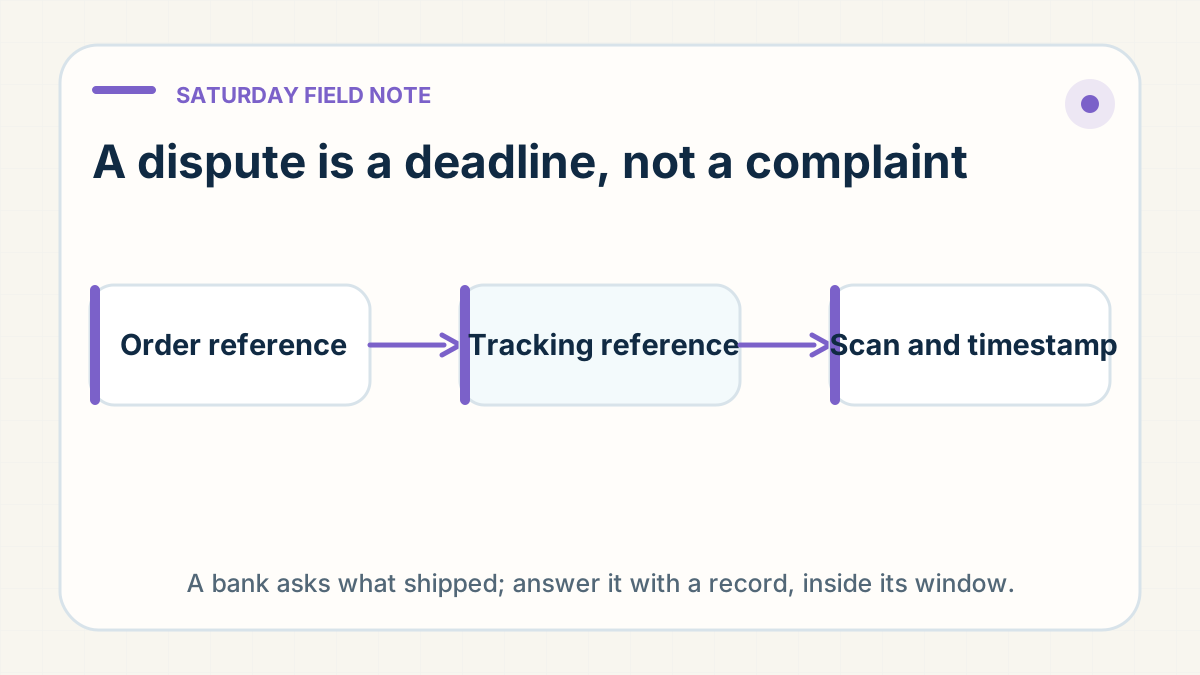
The same desk produced it the same day, in a thread where nothing was in dispute. A seller asked for an update on one order and got back the order reference, the tracking reference the shipment is moving under, the timestamp of the latest scan, and the carrier's own wording for that scan — in that case, a departure scan at the origin transit point. No interpretation, no reassurance. Every line can be checked against somebody who is not you, which is the property a payment provider looks for. A status reply already carries the scan and its date when it is done properly, so asking for the references alongside them is not a special request.
Say the deadline you are racing, not the value of the order
That evening a different thread did the other half properly. One seller asked for a reship to be arranged before a chargeback landed, said the tracking status had still not moved, and asked directly whether the reship had already gone out. The value of the order never came into it. A deadline is what lets the other side rank your message against everything else waiting, and a question about whether something has already happened comes back as a fact rather than an intention.
One case is worth that care because disputes do not stay single: they accumulate as a rate against your payment account, which is what a processor reviews.
A dispute filed before the order ships is a hold, not a claim
Earlier that morning, a third thread was the cheapest to act on. A seller told the desk to stop a brand-new order and wait for confirmation, then gave the reason: the buyer had placed it and was filing a dispute for non-receipt within minutes of checking out. The instruction landed before the order had shipped. A dispute that predates any possible movement is not an after-sales case, it is information about the order itself, and the control that fits is the one this seller used — a hold posted in the thread against the order reference, acknowledged in writing by the other side. That acknowledgement came back the same morning.
Get your partner's record format before a bank asks you for it
While nothing of yours is disputed, ask your fulfilment partner what its standard shipment record contains, and ask for one against a live order so you read the fields instead of the promise; if the scan text and its timestamp are missing, that is the gap to close now. Then ask how long that record takes to produce when the request lands on a non-working day — the next working day, or longer — because the bank's window will not move to fit it. The other half is a standing instruction you can send in one line: an order named by reference, held before it ships, acknowledged back in writing.