Field note
The situation
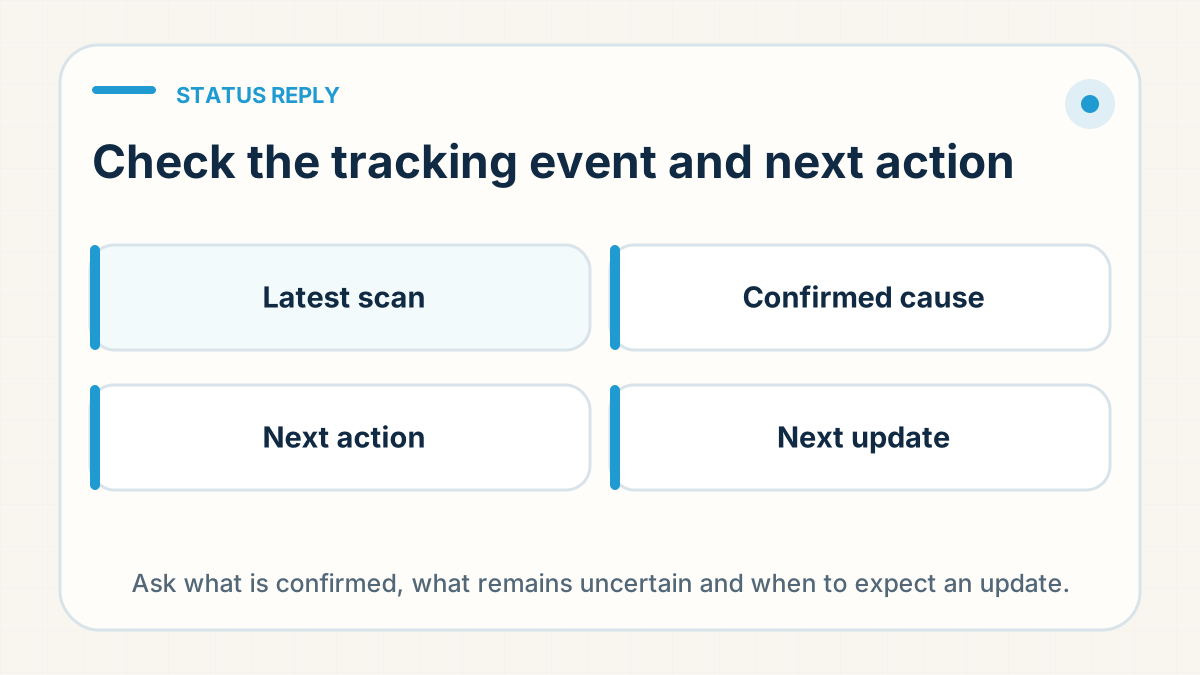
Send a status reply only when it carries four things: the last scan, the cause, the next action and a date. Thursday was the after-sales day. Sellers' support assistants posted tracking chasers, delivery failures and damage claims across Europe, Japan and the US, alongside a large prospect intake from Italy, the UK and the US. The two halves shared one weakness. A status answer, a resend decision or an onboarding template went out quickly but without the parts the other side needed to act on it.
Last scan, cause, action, date
A status reply has to carry four things: the last scan, what caused it, the next action and a date. A tracking link is not a status. "Signed for" is not a status. "Will be updated tomorrow" is not a status either; on Thursday it hid a stock-out that surfaced the following afternoon. Ask for the actual blocker if a reply only gives an update date.
The first answer to an "exception" on a Belgium-bound parcel was a third-party link and "please check". The useful reply came hours later: incomplete address, returning to the overseas hub, reship for a fee once a corrected address arrives. That second message should have been the first. The answer to a Japan-bound parcel reported as not moving was "already signed for"; the next day the assistant asked what that meant, because the customer had nothing, and flagged that it was not the first delivered-but-denied case that month. A delivered-but-denied reply needs the carrier, the delivery date and place, what the recipient should check, and which investigation your partner will open, with a next update date.
Check the destination carrier's own page before sending a failure alert: two French parcels were reported as failed while the local carrier showed both delivered two days earlier, because the first-attempt notice propagates with a lag. And copy the shape that worked: one message handled a Nordic parcel returned for non-collection, with the redelivery fee, a deadline about ten days out, and a request for a new address and a reachable number.
The status vocabulary is published on the tracking status hub, and the guide on communicating tracking handoffs covers the wording sellers can pass straight to a customer.
Agree the default before the first case
The standing after-sales rule has to be agreed before the first case, not discovered inside it. Does a damage photo trigger a resend automatically, or does it wait for a yes? Does a charged resend go onto the next invoice on its own, or does it wait for explicit approval? What is refundable and what is not? What does neutral packaging mean in practice?
Four "we will charge and resend" messages had been read as offers on one side and as commitments on the other; one was three days old and only moved when the seller wrote "please send it". After a run of damaged kits had been resent on sight, the next report was answered with "should we resend?" and that order sat open into the evening. Either rule works; mixing them does not. A seller asked for no lettering or stickers on home textiles, which should have been the stated default rather than a request.
One after-sales lead set the rule in a single message: lost parcels, missing items and cancellations are refundable; parcels returned because the recipient was unreachable or refused are not. The seller had nothing further to ask. That was the handling described in this historical exchange; agree the current cause-specific terms for your account during onboarding.
The rule by cause, and who pays under each, is laid out in the after-sales window guide; for the decision on a single case, use refund, reship, replace or investigate.
Confirm the platform and the decision already made
The platform, the destination and what a teammate or the seller has already decided are usually in the group header or the thread before the question is. A marketplace seller who said twice that he sells on a handmade-goods marketplace received the Shopify collaborator template and had to correct us. A store owner answered a damage ticket within minutes, instructing a resend through a draft order; an hour later the assistant was asked whether the customer wanted a refund or a resend. A structured first enquiry covering transit to Italy, branding and custom packaging got "please send the product link" and none of its questions.
State the platform, destination and any decision already approved when requesting the next action. If a reply ignores those details, ask for a corrected answer and written confirmation of what will happen next.
A useful status needs four parts
Before forwarding a status to your customer, check that it names the last scan, the cause, the next action and a date. Ask for missing information and confirm the after-sales terms before approving a charge or resend.
Check what each scan means on our tracking status page before you forward it.