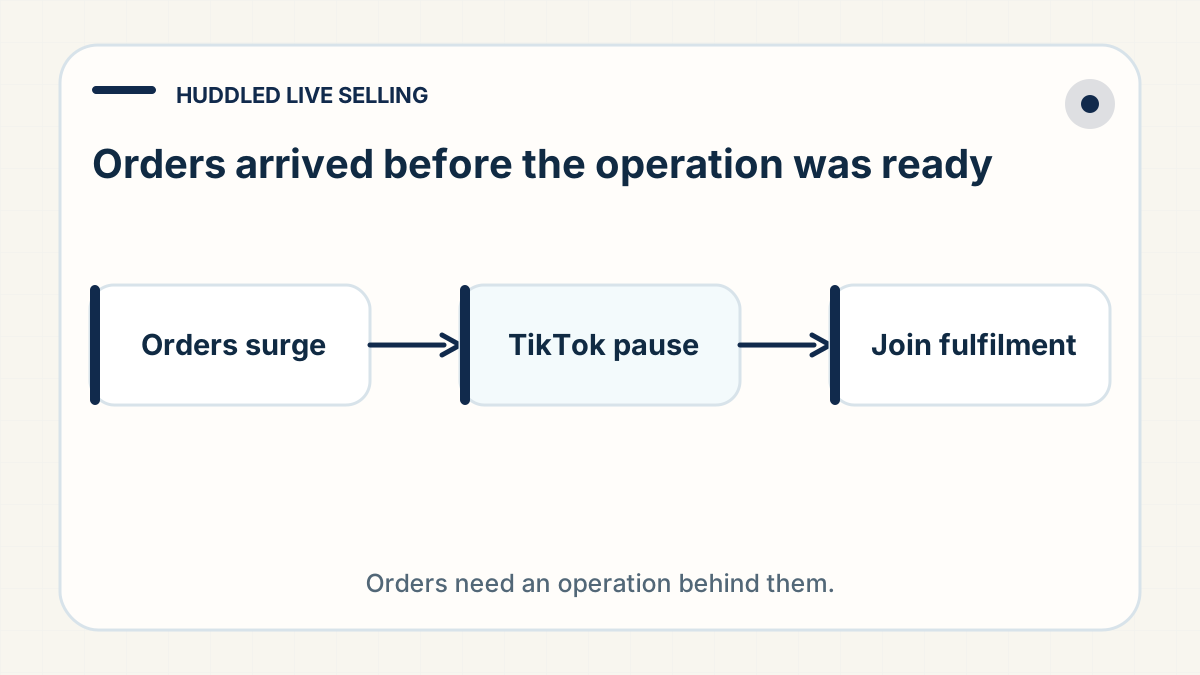
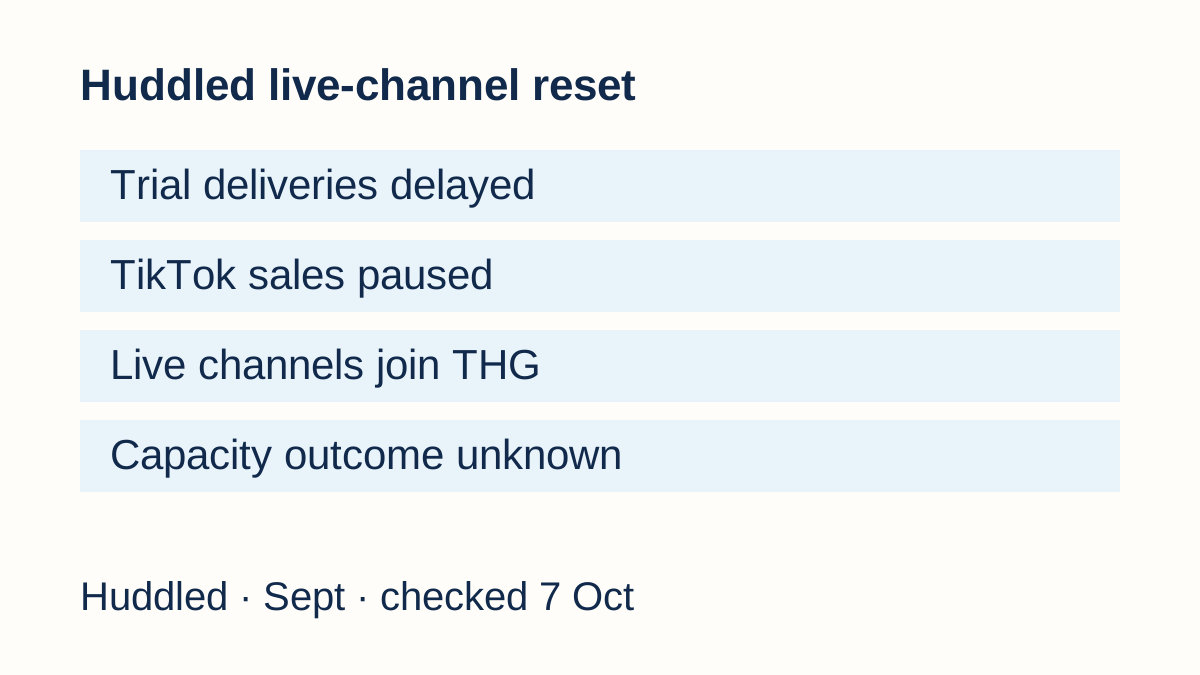
Huddled reports live-commerce revenue running near £100,000 weekly. It also says a TikTok trial produced a burst of orders that delayed fulfilment and delivery. The orders sat outside its THG fulfilment partnership, and the company paused TikTok sales. Huddled's interim statement, pages 1–3.
That is the interesting part of this live-selling story. A channel can attract customers and still expose a gap between accepting an order and getting the goods out. If you source and ship products, the pause deserves your attention as much as the sales headline.
The operation became part of the product
Huddled reports connecting live channels to THG fulfilment, with gross product margin around 40%. Its September statement, pages 1–3.
Our reading: the company is trying to join two different rhythms. A presenter can create demand in a concentrated session. Receiving, picking and packing have their own capacity and sequence. When those rhythms are disconnected, the successful part of the business can create work the next part cannot absorb.
For your orders, the question is where that work waits. Your order can wait for stock allocation, product identification, a label or parcel collection. These are possible bottlenecks, not a diagnosis of Huddled's particular delay. Its statement does not identify which step failed.
For your own operation, a live show therefore needs a clear account of what happens after the customer pays. A stock count displayed on screen means little if other channels can allocate the same goods. An order arriving in a system means little if the warehouse cannot identify what was promised. Integration can connect those steps, but a connection alone does not establish available packing capacity.
ThredUp puts its shows inside the warehouse
ThredUp offers a useful contrast. Its Whatnot announcement places live shows in its Atlanta and Dallas distribution centres, drawing on its unique secondhand inventory. It also describes possible seller-facing inventory, curation and logistics services as areas it is exploring. ThredUp's announcement.
Our reading: these companies illustrate different inventory problems behind the same viewing format. A particular secondhand garment has to be matched to the item the customer saw. A surplus-goods operation has its own mix of product availability and replenishment. If you rely on supplier-held stock, your offer adds another handoff between the show and the goods.
Those differences matter more than the fact that each business can appear on a live platform. Your presenter, supplier and fulfilment partner need to refer to the same approved item. Your reusable listing does not make every physical unit interchangeable. Your replenishable product is not necessarily available when a show generates orders.
The sales figures leave the full cost unanswered
Huddled's weekly revenue is an approximate current run rate. It is not an audited completed-week result or a forecast. The statement does not define the cost inclusions behind gross product margin. That margin cannot establish profit after platform charges, presentation, fulfilment, returns and other operating costs.
The pause and the subsequent integration are management's account. They do not independently prove that the new connection has removed every constraint. ThredUp's launch announcement likewise supplies no live-channel sales or profitability results. A useful follow-up would show how dispatch performance, refunds and costs behave as either company expands the format.
This is a reading of operating disclosures for sellers sourcing and shipping goods, and is not an investment view on either company. It is not legal, tax or investment advice.
Huddled's experience makes the fulfilment path part of the live-selling story. The show creates the order; the operation still has to complete the promise. Other company operating reads.
Need a product checked before you spend on ads?
Send us the product link and destination on WhatsApp (+86 178 4666 9989). We will help you assess sourcing, packing and shipping before you commit.
Get Sourcing Quote on WhatsApp →