Field note
Development, exit and live defects arrived together
Three unrelated product stories landed together. A private-label apparel seller was still trying to turn an evening-wear concept into a fabric, drape and fit specification. A seller winding down a promotional-textile range needed a decision on remaining stock rather than another sales plan. An electronics account was seeing repeated cracked-screen reports that no longer looked like isolated customer accidents.
Their commercial stages were different: development, exit and live after-sales. The only honest common thread was that each needed evidence tied to the exact physical product, not a reassuring general answer.
One generic workflow would mishandle all three
Moving the dress into production too early would lock in the wrong material. Treating leftover textile stock as if the business were continuing would tie up more cash. Replacing cracked devices one by one without checking the supplier, packing and batch would keep paying for a pattern without learning from it.
Give each product state its own evidence and owner
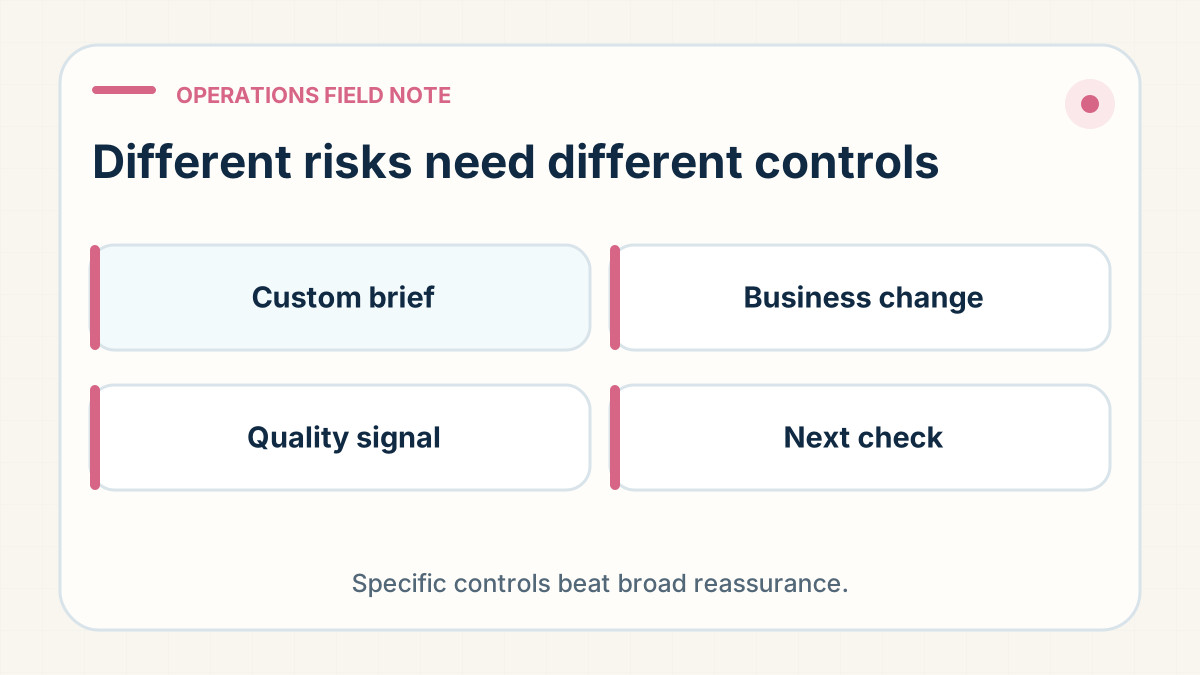
Different operational situations can arrive in the same day, but they should not be solved with one generic response. An evening-wear sample needs a fabric and fit brief; leftover promotional textiles need a stock decision; and a run of faults in an electronics accessory needs a quality check before release.
The common discipline is to document the product requirement, the risk and the next verification step before work moves further.
Specific controls beat broad reassurance when several moving parts are involved.
Three stories left with three different controls
The apparel request stayed in sample-and-spec mode, the winding-down range became a finite stock decision, and the electronics complaints were treated as a quality signal requiring a batch-level check. The day made more sense once the team stopped trying to solve all three with the same language of "we are checking".