From the operations desk
Orders were moving before the presentation was decided
The lightest complete day of the window was mostly intake: enquiry threads carried the traffic while the established fulfilment accounts barely moved. The exceptions were two branding changes in motion, sellers settling how their parcels would present themselves while orders kept arriving on the old presentation. A question arriving after the desk had stopped answering belonged to the next working day.
Another account sat a stage earlier: its first order came in that afternoon, on goods the seller had bought herself and asked to have watched for and sent on quickly. Presentation had not come up in that thread at all, which is the cheapest moment to settle it.
The sticker that was not ordered yet
A cosmetics seller in Europe was asked whether the new logo sticker was needed, since it had to be ordered and produced first. The answer was to send the first orders without it, so the sticker order was held. Ads were already running, orders were already arriving, and no stock had reached the warehouse.
Before agreeing a changeover date, settle which rung the new asset sits on — a sticker that can wait for the next restock, or a carton bought in a production quantity that cannot — because the packaging ladder from a logo sticker to custom tooling prices each rung.
The card that was approved before it was made
A seller of personalised goods shipping to the United States took the opposite decision: rather than hold the new asset back, the branded thank-you card was to cover every order from then on. The supplier had finished a mock-up, sent it for checking, and the seller approved it on the spot — in principle, on a mock-up, not against the version production would later be released from. Only the cost line for the next invoice was settled that day. The card was still artwork, with production and a shipment to the warehouse between it and the first parcel that could carry it.
Approve the version, not the idea: the private-label approval checklist before production sets out what a mock-up has to show before later orders are measured against it. Then tie the start point to the asset reaching the warehouse rather than to the approval date.
Put the start point in writing
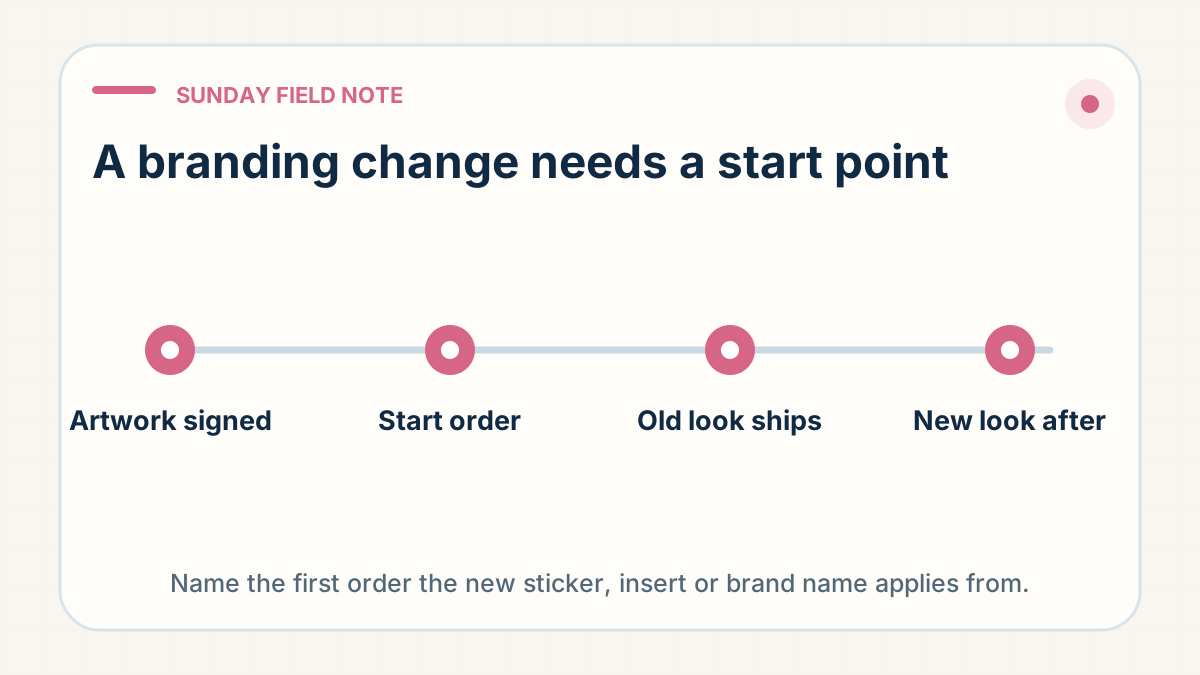
Ask for the changeover in writing whenever the presentation changes: which order ships once the new asset has reached the warehouse, not which day the artwork was approved.
A branding change is a version change like any other, and SKU and product version control for growing stores sets out how to plan one across the stock and versions on the shelf, which is where you are once the asset lands. The date is the part it cannot decide for you. Ask which invoice the customisation lands on at the same time.