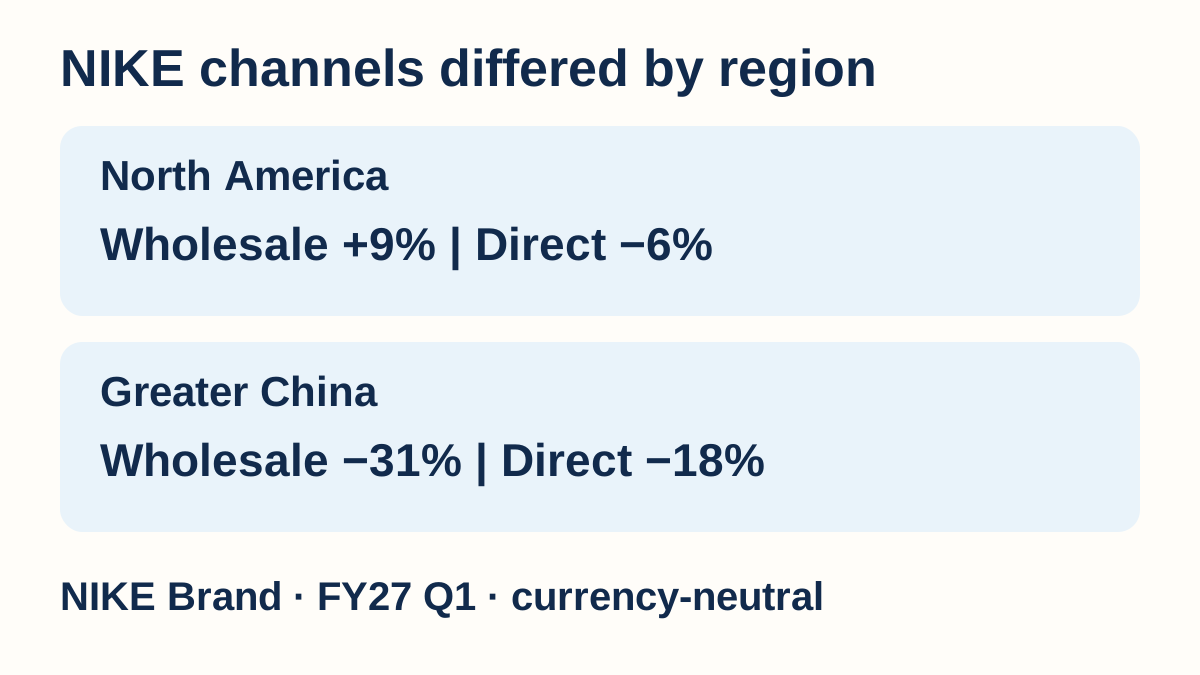
NIKE's wholesale business tells two regional stories. If you read only the group channel figures, you can overlook both. North America grew through wholesale while NIKE Direct declined. In Greater China, wholesale fell faster than Direct, and neither channel grew. If you followed the channel name alone, you would have lost the regional contrast.
These results cover NIKE's first fiscal quarter ended 31 August 2026, compared with the same quarter a year earlier. The regional figures below describe the NIKE Brand. They do not combine it with Converse or turn all of NIKE, Inc. into one retail business. NIKE's quarterly filing.
North American wholesale carried the growth
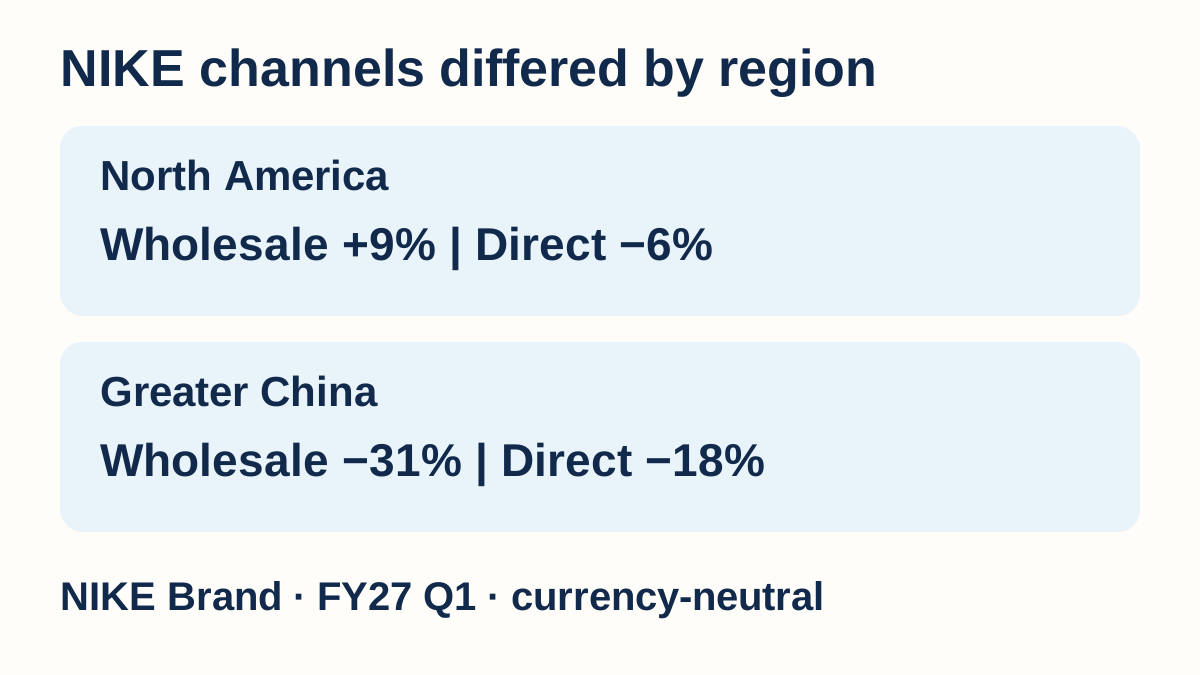
NIKE disclosed North American wholesale growth of 9% on a currency-neutral basis. NIKE Direct fell 6% on the same basis. The region's overall revenue rose because the wholesale increase more than offset the Direct decline.
For NIKE, that is an important distinction. The regional improvement came through the channel serving wholesale customers, even as its own stores and digital business contracted. Calling the whole region stronger is accurate at the total-revenue level. Calling all of its routes to the customer stronger would erase what the filing says.
The filing says North American digital sales and store sales both decreased. When you read Direct, include stores as well as the website. Wholesale growth does not measure what consumers bought from those retailers during the quarter. It records NIKE's revenue from its wholesale customers.
Our reading: the regional result leaves two questions open. How much wholesale growth came from retailer demand, product availability or ordering timing? And what was happening to consumer purchases after goods reached those retailers? The revenue rows show the route through which NIKE recorded growth. They do not, by themselves, answer those questions.
Greater China had a broader contraction
In Greater China, NIKE disclosed a 31% decline in wholesale revenue on a currency-neutral basis. Direct fell 18%. Both channels contracted, with wholesale falling faster.
That changes the company story. Greater China was not showing North America's combination of rising wholesale and falling Direct. Describing both regions as the same shift away from Direct would conceal the wholesale decline in Greater China.
NIKE's filing also says digital sales and store sales declined in Greater China. The digital decline was sharper. This gives you a second distinction within Direct, but it does not identify which customers stopped purchasing, what they purchased elsewhere or why.
NIKE gives a broader explanation in the filing's overview. Management says declining store traffic, heavier promotional activity and higher marketplace inventory are putting pressure on Greater China's revenue and profitability. That account adds context to the regional contraction. It does not assign a measured contribution to each cause or establish that wholesale and Direct declined for identical reasons.
The region is reported as Greater China in the company documents. Keeping that label matters when you compare it with other country figures. You are reading a company operating segment, with its own product and channel mix, rather than a result for every apparel business in one country.
Keep the currency and channel definitions together
All four channel rates used here exclude currency changes. NIKE calculates that comparison using exchange rates from the prior-year period. Its release identifies the measure as non-GAAP. The same regional direction appears in reported revenue, but the size of the Greater China decline differs between the two bases. NIKE's channel-revenue tables and currency note.
If you compare a reported percentage for one region with a currency-neutral percentage for the other, you introduce an exchange-rate difference into a channel comparison. Here the comparison uses one basis throughout. That makes the regional contrast clearer without claiming currency had no effect on the revenue NIKE recorded.
NIKE Direct includes company-owned stores and NIKE Brand Digital. Wholesale is a different revenue relationship. A Direct decline does not establish weaker website conversion, and a wholesale increase does not establish higher consumer purchases at the retailer. Those explanations need their own evidence.
The channel rows do not track customer migration
Management's discussion gives reasons to look beyond the channel rows. In North America, footwear unit sales rose while average selling price fell; apparel unit sales were flat while average selling price rose. In Greater China, footwear unit sales fell while average selling price was flat. NIKE reports those category movements, but it does not separate them into a quantified explanation of the regional wholesale-versus-Direct contrast.
Our reading: North America's opposite channel directions make customer migration a possible research question. They do not prove it happened. Greater China's declines in both channels are a further reason to avoid one explanation for the whole company. The company has reported different regional outcomes; the table has not followed the same people between channels.
To strengthen a migration claim, you would need evidence linking consumer purchases across the channels, on a comparable product and period. To explain the wholesale result more fully, you would need retailer-ordering detail and, where available, retailer consumer-sales evidence. NIKE's stated traffic, promotion and inventory pressures add context to Greater China's result. Their separate effect on each channel remains unmeasured here.
The regional contrast is the story to keep
NIKE's North American wholesale growth and Direct decline describe its own business. The Greater China declines describe another part of that business. None of the four rates measures demand for your product, your website conversion or your route economics.
For sellers sourcing and shipping goods, the useful company question is why the same channels behaved differently across regions. Your own regional numbers require their own explanation. NIKE's filing supplies a concrete contrast to investigate without prescribing a channel change for your store.
This article examines NIKE's operating disclosures for sellers who source and ship goods. It is not a view on NIKE as an investment. It is not legal, tax or investment advice. Other company operating reads.
The finding to carry forward is specific: North American wholesale grew while Direct declined; Greater China's two channels declined, with wholesale contracting faster. Evidence about products, retailer orders and consumer purchases would explain that contrast. Until then, the regional split is established and its full cause remains open.
Need a product checked before you spend on ads?
Send us the product link and destination on WhatsApp (+86 178 4666 9989). We will help you assess sourcing, packing and shipping before you commit.
Get Sourcing Quote on WhatsApp →