From the operations desk
The situation
Friday exposed the cost of promises that live only in a fast-moving chat. A sample request can be acknowledged several times without becoming a sample order. A multi-item quotation can be mostly complete while one category disappears. A request to update tracking can be acted on before the parcel has reached the physical milestone the status is meant to represent.
Acknowledgment is only the first state
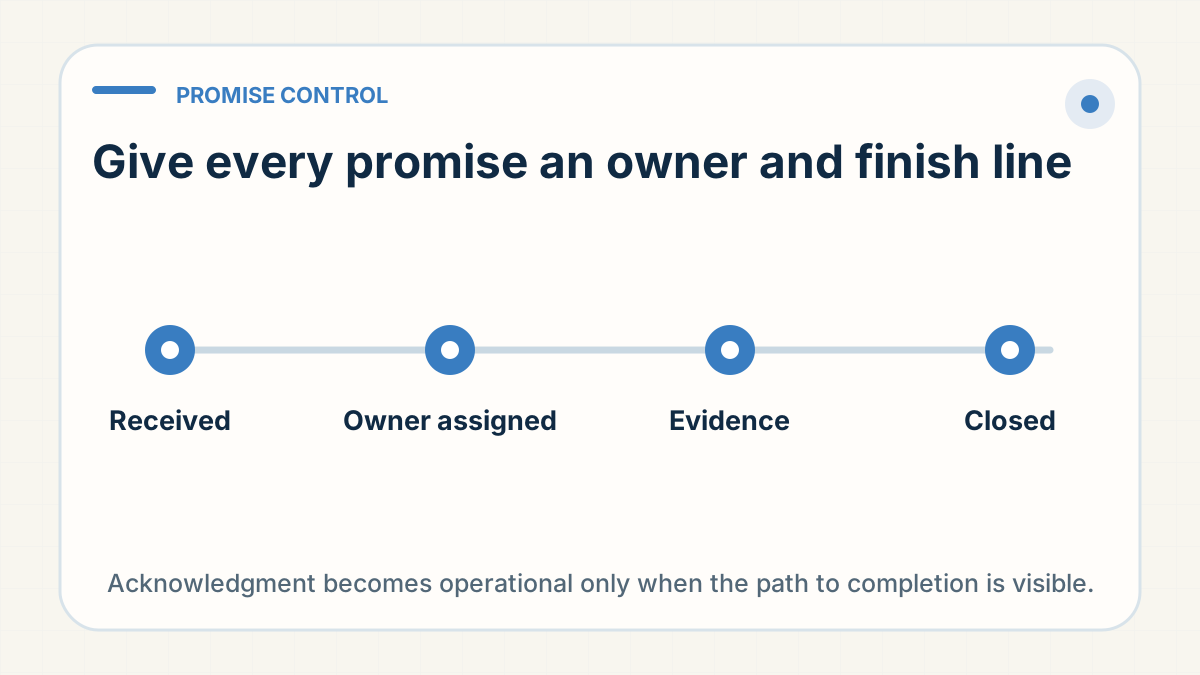
Received and completed are different. Between them, an operational request needs an owner, the required evidence or payment, the current stage, a next-update time and a closure condition. For a sample that might mean exact variant, price approval, supplier confirmation, production, dispatch and tracking. For a shipment it means keeping internal procurement or inbound status separate from customer-facing fulfilment.
Make the promise recoverable
A good update should survive even if the original teammate is unavailable. Someone else should be able to open the register, understand what was requested, see the last evidence, know the next action and tell whether the item is genuinely closed. That is why a simple shared register often adds more reliability than another message saying the team will check.
New seller desk
The newer intake threads were weighted toward broad accessories and general consumer products. Their shared challenge was keeping one approved reference connected across the quote, sample, packing treatment and eventual store workflow. When those steps use different links or loosely described variants, a seller can approve one thing and receive a workflow built around another. One reference record keeps the promise recoverable from first quote to first order.
US, UK and European route questions were all present, and the clearest live-order context sat in the low tens rather than anonymous "high volume". That scale is large enough for inconsistent references to create daily friction, but still small enough to correct the workflow with a controlled product set before it grows.
Make every promise recoverable
Trust is not built by avoiding every delay. It is built by making the delay, dependency and next action visible. A promise becomes operational when the team can show where it is in the workflow and what evidence will mark it complete.