Put the owner's existing enrichment product beside the sink. Ask them to show how they open it, reach the parts that need washing, dry it and put it away. Watch the routine they already follow with their own suitable product. The awkward step may be preparation or storage, several minutes away from the moment your ad would show.
For a Shopify pet seller, that observation can become a specific sourcing brief: an accessory that removes a repeated task for an identifiable owner. It still has to beat the tray, shelf or cleaning arrangement they already use. A first excited reaction from a dog gives you very little information about that comparison.
A refill offer can exist before refill demand is proven
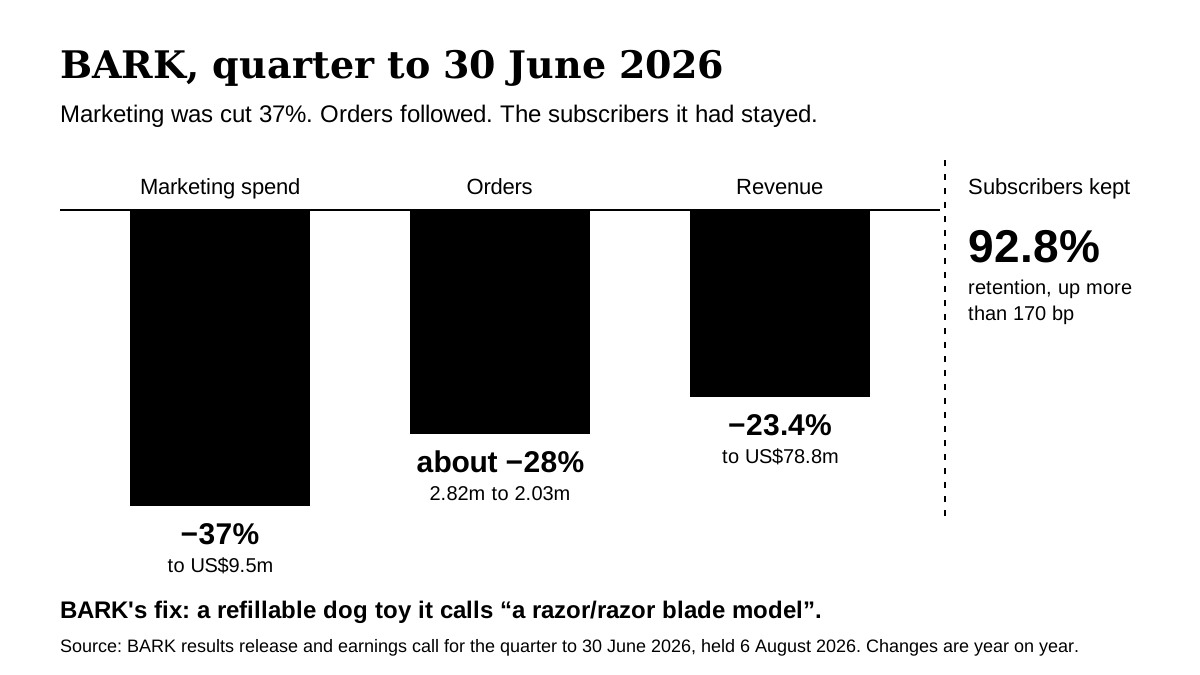
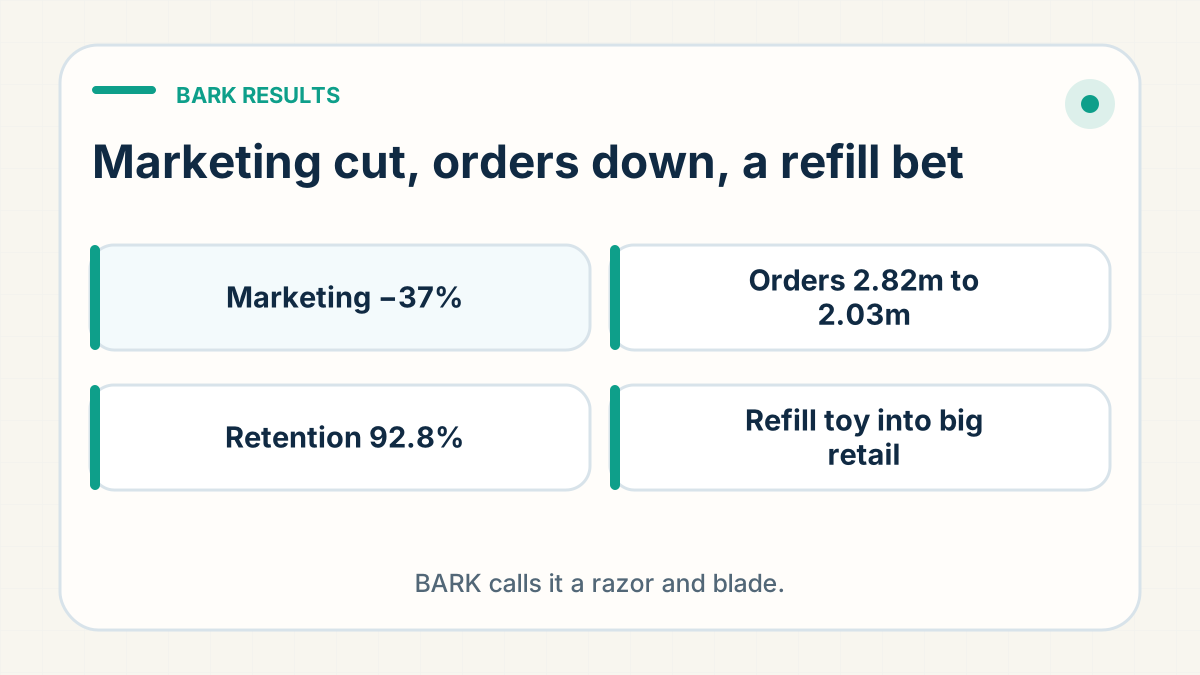
BARK reported US$78.8 million of consolidated revenue for the quarter ended 30 June 2026, down 23.4 per cent year on year. That is the company's Q1 FY2027 result, including businesses beyond enrichment toys. It gives you no toy-specific growth rate or reason to assume your pet store will follow the same path.
On the 6 August earnings call, management described the new Licksters system as refillable and cleanable for the human and expected recurring revenue from treat refills. The reviewed remarks contained no settled paid-refill results for the new product. Treat that expectation as a question your store would have to answer with orders.
The official Licksters Starter Kit page describes a twist-lock chamber, treat-refill options and top-rack dishwasher care. Those are specific offer and care claims for BARK's product. They do not establish the performance of a similar factory item.
The preparation accessory has a different user
WOOF's Pupsicle opens in the middle. WOOF sells ready-made Pops and also a DIY Treat Tray. That choice matters to your revenue forecast: the owner can keep using the base product without buying a ready-made refill each time. Convenience may earn a paid reorder; usage alone does not count one.
West Paw's Toppl Stopper plugs and steadies the Toppl during filling and freezing. West Paw identifies it as a preparation accessory, says it is not a dog toy and requires its removal before serving. The useful product distinction is who handles the part and when it leaves the routine.
If you investigate an original drying rack or preparation organiser, keep its role just as clear in the brief, packaging and instructions. An owner-side label does not remove foreseeable confusion. A loose piece that looks like part of the toy can create a problem your storage idea was supposed to prevent.
A support page gives you a condition to reproduce
WOOF's "My Pupsicle is Stuck" support article acknowledges that the product can become difficult to open after use. It publishes no count of affected units or customers. Use it to ask an opening-and-cleaning question during product research; it cannot tell you that most owners are frustrated or that a rival has a widespread defect.
Care instructions also belong to the exact material and model. KONG's cleaning guidance says KONG Classic Rubber toys are top-rack dishwasher safe. It is older supporting guidance, dated 19 July 2019. You cannot move that instruction onto every KONG item or a visually similar product from another supplier.
For your proposed version, ask the supplier for material identification, intended use, size range, care method, component list and supporting test documents. Record what each document covers. A "food safe" line in a catalogue does not answer all of those questions or establish suitability for animal use.
Observe existing routines first. Before anyone tries a new sample with an animal, arrange competent product-safety assessment covering the design, materials, size suitability, foreseeable misuse and instructions. An unreviewed pet trial cannot serve as your way of finding out whether a product is safe.
Give one awkward step a fair comparison
An owner who has found a convenient tray and shelf may have no reason to buy your organiser. Ask them to show their actual workaround before describing your concept. Record the products and sizes involved, worktop or freezer space, parts they handle, care instructions and the point where effort repeats.
- Preparation: count the separate pieces and handling steps. Note spills, unstable placement or parts that are easy to confuse.
- Cleaning and drying: record the stated care method, what can be reached and where the owner leaves each part. Do not turn a timed wash into a claim about hygiene or sterilisation.
- Storage and next use: check whether the dry items fit the intended space and whether the owner can identify the right parts without sorting through a pile.
Choose one of those tasks for the first brief. A measured storage improvement can be worth testing even if it changes nothing about the toy itself. Conversely, a new accessory that adds assembly, washing or loose parts may make the routine worse. Keep that result; it saves you from funding the wrong product.
Use the blank owner-routine worksheet to compare the existing setup and proposed version under the same conditions. Your photos, timings and observations should identify which version was checked. The sample-approval guide explains how to carry that decision into a revision list.
Count the repeat event your customer actually paid for
Keep delivered base-product buyers, reported continued use, paid refill buyers, paid accessory buyers and renewed subscriptions as separate records. Add the observation dates and refunds to each. A free replacement is a service cost; it is not another paid purchase. A homemade refill can support repeat use while creating no refill revenue for your store.
An accessory offered to existing customers can share the store's earlier acquisition effort. A standalone offer to strangers has to pay for its own traffic. Compare those routes separately before turning a useful add-on into a new store. Pet food and supplements also introduce ingredient, storage, labelling and destination questions beyond the accessory's own sourcing brief.
If you later test an accessory offer with eligible past customers, randomly assign the offer and a holdout where feasible. Use the same observation window and compare profit after included variable costs across all their purchases per assigned customer. Count discounts, refunds, support and purchases the accessory displaced. The first-order profit and later-purchase guide gives the wider cost comparison.
Plan the group sizes from your baseline purchase rate, variation and minimum improvement worth acting on. There is no universal customer count that makes this result reliable. If your store cannot support that comparison, use the small trial to find operational problems and leave the revenue claim unresolved. A short owner diary does not establish long-term retention.
Decide which part earns a sample
Write one sentence naming the exact owner task, existing workaround and observable improvement required. Attach the product measurements and the reviewer responsible for unresolved suitability questions. Fund a sample only when that sentence survives the comparison; otherwise change the brief or drop it. That gives your supplier something it can either meet or fail.
RyanFulfil's sourcing and fulfilment services can support exact-version questions, factory coordination, packaging and destination quotes. Specialist testing and product certification need their own scope. Neither a supplier quote nor a packing check establishes repeat demand.
Evidence and recheck points
Last verified 5 September 2026. The company result is consolidated BARK revenue; the call transcript is third-party text, published 13 August, and was not checked against audio. Product and support pages establish the brands' descriptions and instructions. Their performance, calming, health and duration claims are not adopted here.
The routine comparison and worksheet are proposed research tools. No product was sampled, safety-approved, sold or trialled with an animal for this article, and no customer outcomes were measured. Recheck when the product, material, care instructions, component role, intended market or offer changes. An adequate existing workaround or a proposal that adds more owner effort would defeat the opportunity described here.
Need a product checked before you spend on ads?
Send us the product link and destination on WhatsApp (+86 178 4666 9989). We will help you assess sourcing, packing and shipping before you commit.
Get Sourcing Quote on WhatsApp →