Field note
What was happening
The week did not have one headline issue. Instead, it contained the small decisions that tend to become expensive later: a supplier's version name that did not match a seller's label, a packing instruction that had not been written down, and a delivery update that needed a more exact explanation. These are easy to overlook precisely because each starts out looking minor.
What kept coming up
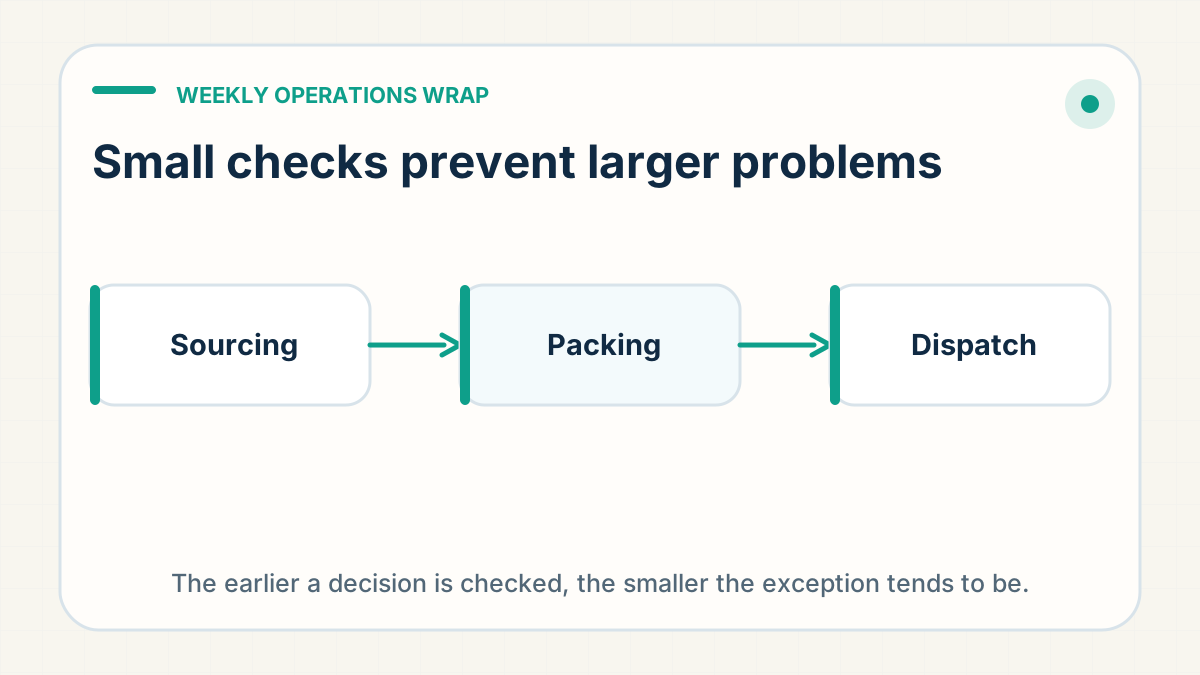
This week's work had a familiar pattern: most of the important decisions were small when they first appeared. A sourcing question needed a clearer specification; a product variant needed a reliable name; a shipment needed a more realistic update; and a packing instruction needed confirmation before dispatch. None looked dramatic alone, but each was easier to handle before it became a customer-facing problem.
The operating lesson
The common thread was evidence. A price needs the scope behind it. A delivery update needs a real milestone behind it. A branding or packaging request needs to work with the physical item. When evidence is incomplete, saying what still needs checking is better than filling the gap with confidence.
The call lesson
Put your immediate question first and ask for a written follow-up stating the confirmed facts, open checks and next action.
Product aliases create physical mistakes
Similar names, supplier nicknames and changing variant labels are manageable in a conversation but dangerous at the packing table. The durable fix is one warehouse SKU tied to the approved photo, specification and version. If a new factory or revision changes the product, it needs a new approval reference.
After-sales needs an evidence standard
A customer report should start an investigation, not predetermine blame or remedy. Photos, video, packaging condition, delivery timing and the approved specification help separate inherent defect, transit damage, setup issue and later wear. The case decision should then feed back into the QC or packing rule if the problem could recur.
What sellers can take from it
Build a process that catches decisions early. It will not remove every exception, but it will make the exceptions smaller, clearer and cheaper to resolve.