From the operations desk
The month in one line
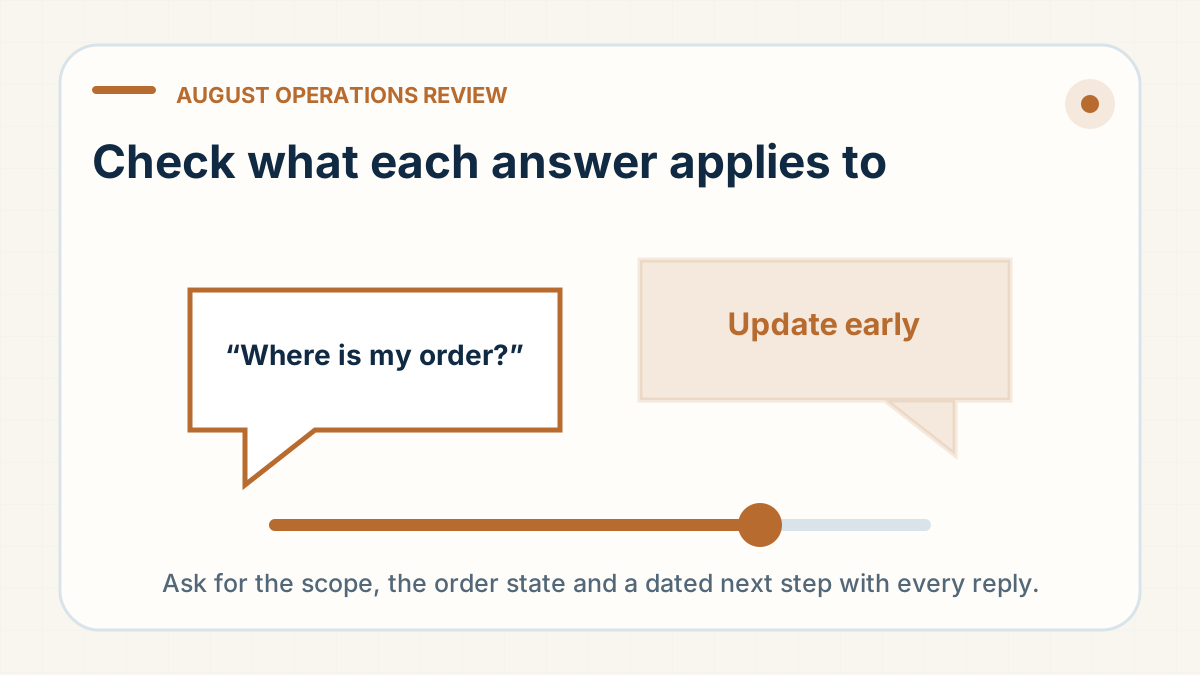
August was the month correct answers kept coming back as questions. A price arrived without saying what it covered, a hold was acknowledged without a confirmed state, a refusal came without its alternative, and a deferral said "tomorrow" on a Friday evening. Across RyanFulfil, the strongest work sent each answer with what it applied to, where the order physically stood and the next move on a named day.
- 01Screen the exact itemItem plus destination, before any route or price.
- 02Name the confirmed stateReceived, stopped, amended or released—not “noted”.
- 03Label every figureWhat it covers, which lane, which quantity and whose claim.
- 04Give the next move a dayThe alternative, the owner and the working day it lands.
August by the numbers
August's evidence base is 31 dated daily operations notes, one for each day from 1 to 31 August, and six weekly review windows that touch the month: July 25–August 1, August 2–8, August 9–15, August 16–21, August 23–28 and August 30–September 5. Three weekly sourcing demand logs cover 2–22 August. Saturdays 22 and 29 August each have their own daily note and fall between weekly wraps. From that material we grouped six recurring case clusters and carried seven controls forward.
We do not publish a "people contacted" total for August. The first window is shared with the July review and the last runs into September, so adding the windows together would count other months' work as August's. The same seller can appear in a prospect thread and a fulfilment group and continue from one week into the next. The demand logs describe public supplier-request posts, not sellers who came to the desk, so they cannot be added to a contact figure either.
Commercial stage is reported in the bands the wraps use. Early in the month that band ran from no paid orders and single-product tests through low-tens live operations, with separate sourcing conversations in the hundreds-of-units range; from mid-month the wraps word it as single-digit or first-order tests through hundreds of sourcing units.
What sellers actually brought us
Some sellers were still choosing a product. They arrived with a marketplace listing, a competitor's page or only a photo, and others asked for a catalogue or a list of winning products. The useful work was turning the reference into a specification a supplier could match, screening that exact item against the destination, and ending with one next step rather than a quote for a product that could never ship.
Sellers with first orders and low-tens live operations brought changes and exceptions: holds and cancellations racing a batch, address corrections after release, parcels held for collection with a deadline behind them, and damage claims resting on photographs of the packaging. They needed a confirmed state and a reply they could forward to their own customer.
Sellers comparing prices brought rival quotes, domestic marketplace listings and retail multi-packs, or asked for bundle tiers and lots shipped to one address. Other sellers were changing how their parcels presented—a logo sticker held back while first orders shipped, a thank-you card approved on a supplier mock-up—or having their own manufacturers post goods into the China warehouse.
The question a seller asks—can you get this, what does it cost, can you stop it, when will it arrive—is rarely the whole decision, so what a reply carries with it decides whether a dropshipper can act on it. Sellers still choosing a product needed the eligibility answer first, sellers already shipping needed the order's confirmed state, and sellers comparing prices needed the basis behind each figure.
August at a glance: markets, categories and where replies fell short
The weekly wraps place August's work across US, UK and European markets, with France, Germany and the United States recurring as destinations. The product mix pooled apparel and accessories, home and lifestyle, beauty, electronics accessories, personalised goods, pet supplies and children's products, and home-and-lifestyle goods led the August 23–28 window. These are pooled patterns across conversations, not the footprint of one identifiable seller.
July made promises recoverable. August's difficult moments were rarely silence or a wrong fact; they were correct replies missing a part the other side needed—a price without its inclusions, an acknowledgement without a confirmed state, carrier contact details without an instruction, a deferral without a day. The wraps named that gap in turn: publish the window, carry one reference, give every number its legend, send the next move, and ask what it applies to.
The month week by week
July 25–August 1 closed on 1 August and handed the new month its starting point: a quick reply is not closure. The wrap keeps an estimate apart from a quotation until a unit has been packed and measured, and ends on one open-action register that makes every promise recoverable.
August 2–8 asked whether each request was still changeable or already fixed, and answered by publishing the windows before anyone needs them: what will not ship, when an order stops being editable, what evidence a claim needs, and when invoices are issued and settled.
August 9–15 made one reference survive every handoff: a correct total still needed a correct breakdown, a hold message needed a confirmed warehouse state, and personalised files had to stay attached to their order lines.
August 16–21 put a legend beside every number. A price had to say what it covered, a supplier's dispatch promise was relayed as the supplier's claim until a scan existed, and a status reply had to carry the last scan, cause, next action and a date. Saturday 22 August falls between wraps; Saturday: The Answer That Travels With the Question covers it, with quotes that answer the seller's next question about what the price includes, destination field lists collected before the order rather than at invoice time, and a named next update on open after-sales cases before the weekend.
August 23–28 finished each answer with its next move: the alternative beside a refusal, the basis beside a price and a named day beside a deferral. Saturday: The Courier Closes Before the Desk Does covers 29 August, which has no wrap of its own, and shows that the courier's collection, not the speed of a reply, ends a shipping day.
August 30–September 5 supplies the month's closing days. Its branding and inbound-leg sections, drawn from the 30 and 31 August notes, ask which order a new branding asset starts on, rather than the day its artwork was approved, and who owns the leg that carries a seller's own goods into the China warehouse.
Case file: eligibility belongs ahead of the route
Early in the month a run of enquiries had gone some distance before anyone asked whether the exact item could ship: a device whose shape was a registered design, apparel printed with recognisable sports figures, replica branded goods, a bladed item, food bound for the EU and a wellness product too large for any route worth standing behind. In several cases advertising was already running. Late in the month an oversized solid-wood item was offered sea freight and then declared unshippable shortly afterwards, because the supplier could not provide the timber paperwork.
Monday: Saying No Early Is Part of the Service sets the rule: screen the exact item against the exact destination before any spend on demand, and separate what cannot ship at all from what can travel only on a slower or costlier channel. Own Brand, Third-Party Brand or Lookalike: What a Fulfilment Agent Can Ship is plain that RyanFulfil does not source counterfeit or third-party branded goods. Wednesday: Sourceable Is Not the Same as Shippable orders the check—material, dimensions, battery, brand and certificates before route and price—while Sunday: A Clean No Beats a Slow Maybe shows that a refusal is finished only when its reason and the next available option travel with it.
Case file: a change request needed a confirmed state
Whether a hold, cancellation or address correction was possible depended on where the parcel physically was, not on how reasonable the request sounded. In one warehouse workflow, a message sent at an ordinary hour for the seller could land after that day's batch had stopped being editable. Requests also arrived phrased as a hold and meaning a cancellation, or the reverse, and a polite acknowledgement in chat could not show whether packing had actually stopped.
Wednesday: The Window Where an Order Can Still Change records the matrix both sides wrote down: which day's orders are fulfilled on which day, the hour after which that batch stops being editable, and a separate weekend row. Monday: A Request Is Not a State Change adds the state ladder—received, confirmed stopped, amended or released—and the order change and cancellation cut-offs guide sets out what each fulfilment stage still allows.
Case file: one product reference had to survive every handoff
Conversations turned on an available alternative to the original item, or on stock from a seller's own supplier sent into the warehouse. Each item could be described as available; none was ready to release on availability alone. On the last day of the month the same check reached the warehouse door: before goods landed, the desk read the size variant a seller had paid for against the order export it would pack from, found that they disagreed, and asked which to pack instead of guessing.
Wednesday: A Product Link Is Only the Starting Reference turns a link into a matchable specification without treating the page as the supplier. Friday: In Stock Is Not the Same as Approved separates quantity from identity and asks for a receiving contract for seller-supplied stock, and Monday: The Arrival Is Where You Check What Landed shows the paid order read against the packed order before anything moves.
Case file: a figure left the desk without its legend
Several August disputes were about numbers whose arithmetic was sound. A multi-part hobby kit was priced on its main unit alone, the prospect read it as the price of the whole kit, and when the bundle price followed later the lead went cold. A bulky children's ride-on was quoted as a single parcel when the buyer meant a lot shipped to one address. A per-piece quote set against a retail multi-pack showed a large gap that closed to near parity once both were quoted at the same quantity. The desk's quotes are all-in almost always, with any separate line stated on the quote; the legend is what lets a seller see that.
Monday: A Price Is Not a Quote Until It Says What It Covers names the labels a price needs: the exact variant or component list, the lane and destination, whether shipping, tax and the per-HS-code line sit inside the figure, and the production time before transit. Friday: Quote the Shape the Order Will Take adds quantity, parcel or consignment, bundle contents and currency, and Monday: Match the Basis Before You Match the Price asks for the comparison artefact and requotes on the same basis before anything is conceded.
Case file: the evidence, not the scan, decided the claim
A customer reported an electrical item that arrived in a wet outer package with corrosion visible on a cable. The photographs showed only the packaging, which cannot tell a soaked outer bag from a failed product; the first occurrence was resolved generously and the evidence needed for a repeat was stated at the same time. The next day, orders to one European market could not move without a telephone number, others lacked a house number, and a handful of parcels marked delivered had not reached the person expecting them.
Thursday: The Evidence That Decides a Claim asks for an image or short video of the item itself, ideally beside the shipping label. Friday: Reaching the Recipient Is Part of Delivery treats a delivery scan as strong evidence rather than proof, and Thursday: A Status Reply Carries Four Things shows a parcel exception first answered with a bare tracking link, and the reply format that should have come first: last scan, cause, next action and a date.
Case file: a closed day still owed a named next touch
On Saturday 8 August, customisation and pricing questions needed factory confirmation while the factories were closed. On Sunday 16 August, an after-sales batch sat unworked while the seller's assistant re-tagged the same tickets, because nobody had said when the work would be picked up. On the last Friday, deferrals sent late in the evening let questions fall silently into the weekend. None of these replies was wrong; each left the seller to discover the calendar alone.
Saturday: What the Weekend Can and Cannot Move sets the pattern: say the input is unavailable until Monday, answer what does not depend on it, and give a specific time for the rest. Sunday: A Weekend Message Needs a Named Next Touch separates process-only questions from factory-dependent ones, and Friday: Tomorrow Means Monday puts every deferral on a written register with a named owner and a named day.
Controls August carried forward
- An eligibility screen that checks the exact item against the exact destination—material, dimensions, battery, brand and required documents—before a route or price is quoted.
- A written order-change table: which day's orders are processed on which day, the hour each batch stops being editable, a weekend row and the changes that survive the cut-off.
- A state ladder for holds, cancellations and approvals: request received, action confirmed, amended or released, with who confirmed it and what releases the next step.
- A legend on every quoted figure: exact item and unit basis, quantity and order shape, inclusions, lane and destination, and time before dispatch.
- An evidence standard for claims that asks for the product itself beside the shipping label and treats a delivery scan as evidence to check, not proof.
- A status reply that carries the last scan, cause, next action and date, with any supplier or carrier statement labelled as that party's claim.
- A deferral register in which every question carried past a closed day has a named owner and a named working day.
What the team had to overcome
- Attention spent before the eligibility question. Sellers had invested effort, and sometimes advertising, before asking whether an exact item could leave China for their market.
- Change requests racing the physical workflow. What a request meant, and when it counted, both stayed open to reading until someone confirmed the state.
- Figures that travelled without their basis. Sound arithmetic still produced disputes whenever the reader supplied a different basis from the writer's.
- Evidence that could not decide the case. Photographs of packaging, a delivered scan with no handover and a proof-of-delivery photograph showing a neighbouring house number each pointed at the wrong artefact.
- Data sent without its meaning. Held-parcel notices carried correct carrier contact details but no instruction, so one seller asked the same questions on separate days until the notice led with the action.
- Calendars that did not line up. Factory hours, collection times and the desk's own working days each set a different edge to the day, and a deferral that did not name its day left the seller to guess which edge applied.
The team did not overcome those problems by replying faster or promising more. The more durable response, where it was used, was to make each reply carry its own scope: which item and destination it covered, what state the order was physically in, whose claim a date was, and which working day the next update would arrive. That costs a sentence in the message; leaving it out cost a round of questions in the threads where it was missing.
What changed—and why it matters to a dropshipper
Eligibility belongs at the start of the conversation. A refusal at enquiry stage costs a disappointing message; the same refusal after a customer has paid can bring a seizure, a refund, a chargeback and a store reputation problem at once. For a dropshipper, the screen belongs before creative, a landing page or a paid click.
In one warehouse workflow, order changes gained a written window. A table of batch days, editable-until hours and a weekend row can be quoted directly in a seller's own store policy and support replies, which turns "let me ask" into a deadline a customer can plan around, even when the answer is no.
A quote needs its legend. When a figure states the exact item, unit basis, order shape, inclusions, lane and time before dispatch, a dropshipper can compare it with a rival price on the same basis and set the margin against the order the customer will actually place.
Claims and delivery disputes turned on artefacts. A timestamped origin scan, an invoice history and raw tracking events read back with their dates each settled a question that an assurance could not. For a store, that means collecting a reachable phone number and a complete street number at checkout, and asking customers to photograph the item itself, not only the parcel.
A deferral needs a named day that a seller can pass straight to their own customer. The outcome we can support is operational clarity—screened eligibility, written change windows, confirmed states, labelled figures, item-level evidence and named next touches—not conversion, savings, delivery-speed or refund improvements that the reviewed notes cannot show.
If August sounds like your current operation, take your next quotes through how to read a landed-price quote from a China fulfilment agent, then ask RyanFulfil to quote the same item on the same basis before you set a customer price.