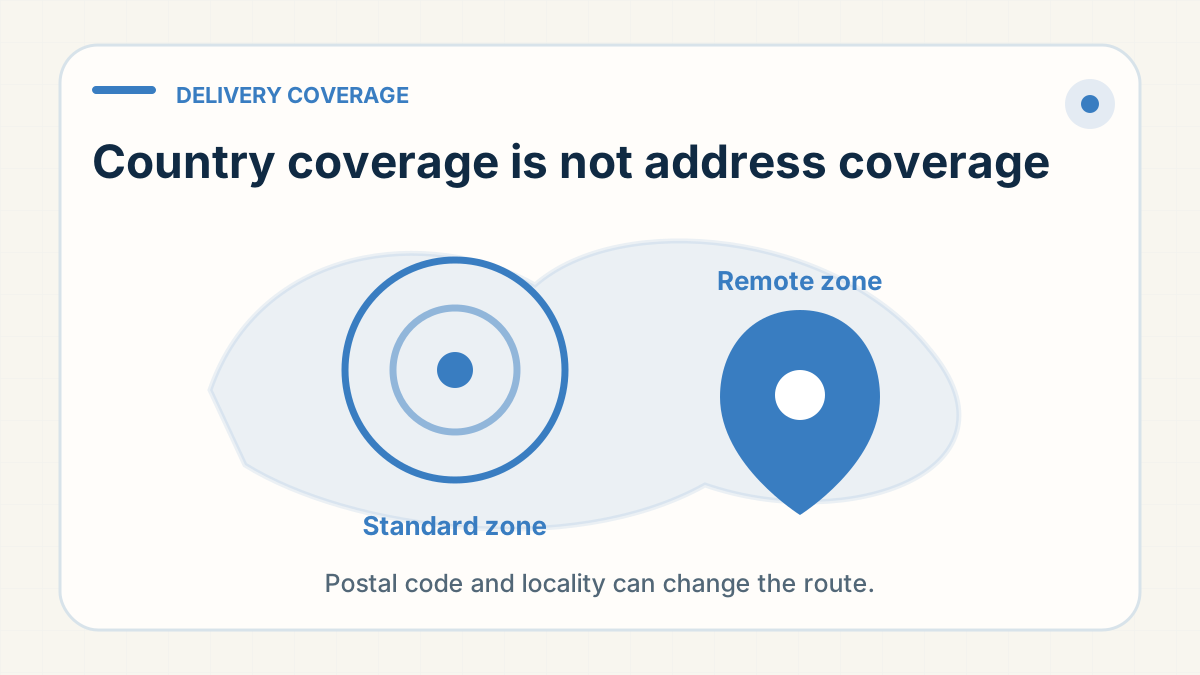
An address that looks complete can still be unsuitable for a particular shipping service. Postal boxes, military-style addresses, remote areas, territories, apartment-delivery rules and postcode coverage can all change the available route, cost or delivery experience.
Check the address before dispatch
Confirm the full address, postcode, local contact details and whether the selected service accepts that address type. If a route needs a street address, signature option or an alternative service, obtain the customer's confirmation before releasing the parcel.
Do not assume automatic rerouting or insurance
Availability, surcharges, delivery signatures, rerouting and compensation depend on the selected service and its written terms. RyanFulfil does not promise automatic postal rerouting, postcode validation, insurance or guaranteed delivery matching from a general guide.
Make the customer promise match the checked route
Tell the customer when the address requires a different route, more information or a revised quote. The practical goal is a clear choice before dispatch, not a surprising exception after the parcel is already moving.
Country coverage is only the first gate
A route can be available to a country and still fail at the customer's actual doorstep. Operations conversations repeatedly surface the awkward cases after payment: a postal box where the chosen service needs a street address, an island or remote postcode with a surcharge, an incomplete apartment field, a territory handled differently from the mainland, or a recipient phone number missing when the local network requires contact.
The commercial pressure is to release the order while the customer is excited and fix the detail later. But once a label is created or the parcel is accepted, an address edit may become slower, chargeable or impossible. The seller then owns a choice that should have been made at checkout.
Design checkout for the exceptions you actually see
Collect recipient name, street and unit details, locality, postcode, country and a usable contact method in separate fields. Preserve the customer's original entry, then record any confirmed correction rather than silently guessing what an abbreviation means. Flag known address types for review before release.
A validation tool can catch formatting and obvious omissions, but it cannot prove that a carrier serves a remote property or that the customer can use a pickup point. For a flagged order, check the exact service and postcode, explain any alternative and obtain the customer's decision before dispatch.
Choose among four honest outcomes
- Release on the original route because the full address is supported.
- Use a supported alternative with a revised cost or delivery range.
- Ask for a different address or missing field before booking.
- Cancel and refund under the store's policy when no workable option exists.
Good address handling feels uneventful because the decision happens before the parcel moves. The evidence to keep is simple: the address supplied, the exception found, the option confirmed and the service ultimately booked.
Review failed-delivery and address-correction cases together each month. If the same field or market repeatedly creates exceptions, change the checkout prompt or release rule. The strongest fix is not a faster support reply after dispatch; it is preventing an incomplete order from entering a service that cannot complete it. Test the revised checkout on mobile as well as desktop, because a technically optional-looking field can still be operationally essential.
Address checks that prevent an avoidable exception
- Collect the complete address, postal code, phone number and recipient name before booking.
- Flag islands, military addresses, PO boxes, rural areas and territories rather than assuming country-level coverage applies.
- Check whether the selected service supports that address type and whether a remote-area surcharge or alternate service applies.
- Keep the customer promise flexible until the route has been confirmed for the full address.
Useful rule: destination country is only the first filter; the postal code and locality often decide whether the delivery plan actually works.
Need one order or route checked?
Worried about an order's tracking? Send us the order number on WhatsApp (wa.link/dropship) and we'll check what's going on.
Check Order on WhatsApp →