Field note
What was happening
The calls this week came from sellers at very different stages: some were still comparing options, while others had a live order flow with one specific point of friction. A broad service overview would not have solved either problem. Each conversation needed to identify the decision that would unblock the next safe step.
The useful outcome is a decision, not a performance
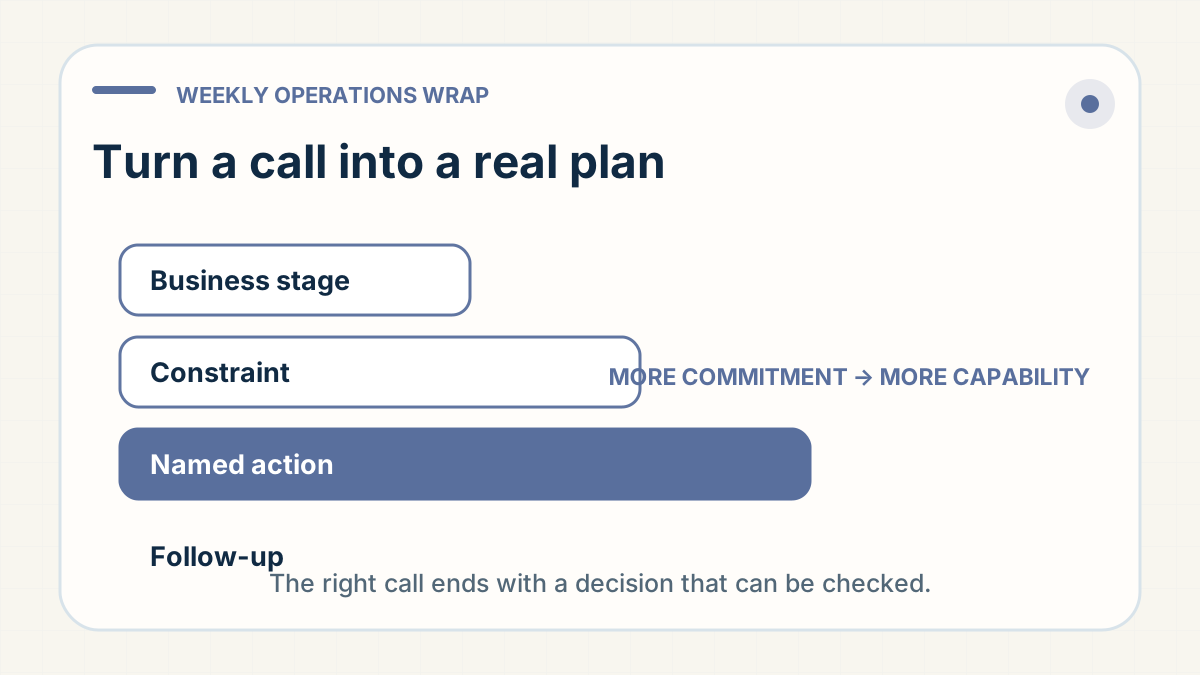
A good seller call does not need to cover every possible service. Its job is to establish the business stage, the product and shipping constraints, and the next decision that will unlock progress. Some sellers need help comparing sourcing options; others need a clearer fulfilment handover or a more realistic shipping expectation. The common requirement is an honest view of what can be confirmed now and what still depends on evidence.
Why the follow-up matters
A conversation only becomes operational when it produces a short follow-up: the facts agreed, the open checks, the owner of each action and the point at which a seller can decide whether to proceed. When a prospective seller moves into onboarding, that record is more useful than a broad claim that everything is handled. It keeps the commercial conversation tied to the actual work.
Volume does not define complexity
A seller with no current orders can still have a difficult sourcing, compliance or market-fit question. Equally, an established seller may need a straightforward operational check. The right call length and preparation should follow the question and the decision at stake, rather than assuming that an order count tells the whole story.
Similar is a decision, not a silent substitution
The week included repeated situations where only a related variant, another factory version or a product with a different material was available. The correct next step is to show the difference, explain the effect on price, quality or delivery, and obtain approval. "Similar" should never quietly become "exact" at purchase or packing.
Delivery exceptions need different paths
Customs review, incomplete address data, a failed last-mile attempt, confirmed loss and an overseas return may all look like "stuck tracking" to a customer, but the evidence and remedy differ. A useful exception record names the current state, the party who can move it and the deadline for the next escalation.
The takeaway for sellers
Ask for the next decision in writing after a call. A clear follow-up makes it easier to compare partners, brief a team and decide whether a small test is the right next move.