Field note
The situation
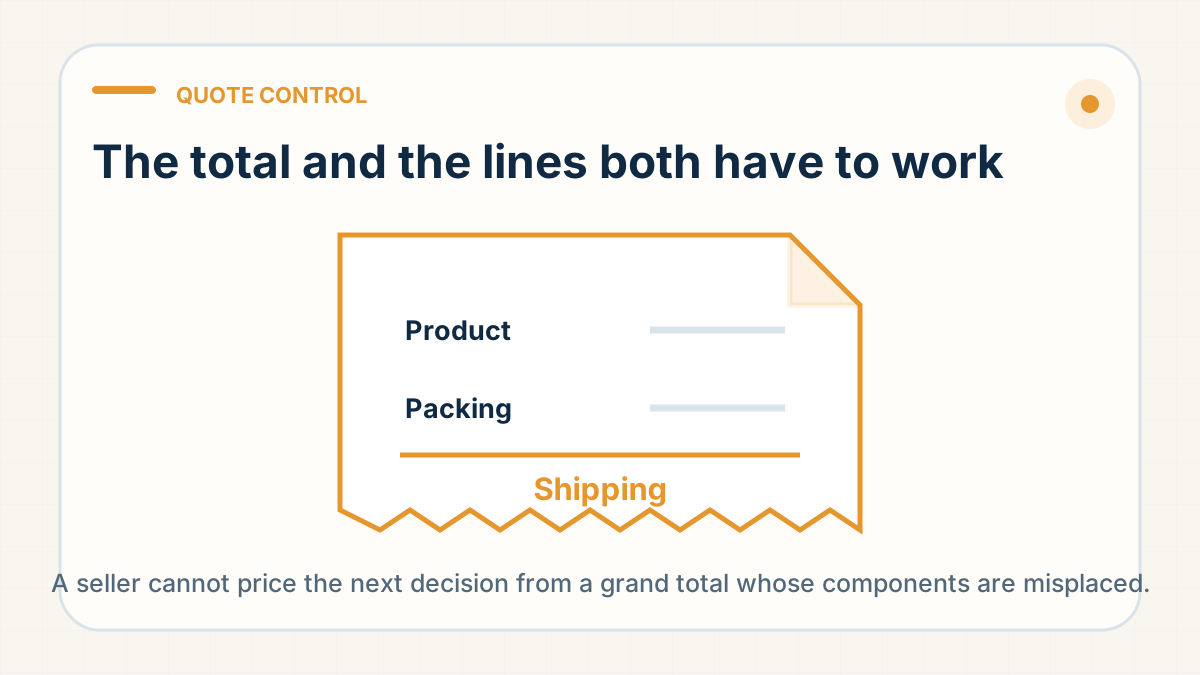
Approve a quote's structure as well as its total: every cost line should say what it covers. Sunday was quieter, which made it useful for checking the structure underneath several early sourcing conversations. One multi-item quotation reached the right overall total but put part of the cost under the wrong line. The amount due had not changed, yet the breakdown still needed correcting because the seller could not use it to price the products, compare a bundle or understand what another unit would cost.
A total is not an audit trail
Product cost, domestic movement, international shipping, packing and any one-off custom work answer different commercial questions. Combining them can be convenient at payment time, but the working quote should still show which cost belongs where. A seller deciding whether to add a second unit needs the marginal product, packing and weight effect; the grand total from one order does not reveal it.
The right response to a challenged breakdown is not to defend the total. It is to acknowledge the allocation error, issue a corrected line-by-line view and preserve the original scope so the two versions can be compared. A quote becomes trustworthy when another person can reconstruct it without the author in the room.
"One unit" can describe three different offers
Customisation questions exposed a similar ambiguity. A supplier may sell one blank unit, apply a name or image one order at a time, and still require a batch minimum for a factory logo, changed component or custom box. Those are not conflicting answers. They are different production jobs, each with its own minimum, setup cost, lead time and proof step.
Before telling a seller that customisation has no minimum, separate the base product, per-order personalisation, batch branding and packaging. Then state which part the answer covers. That one label prevents a test-order promise from being mistaken for a factory-production promise.
The seller's stage decides the useful next action
The pooled conversations ranged from people still choosing a product through first tests and repeat fulfilment. The same quotation should not push all of them toward the same commitment. An early seller may need one exact reference and a sample decision. A live seller may need a packed-weight check or a stock plan. An established account may need the quote split into fields its finance and warehouse teams can reconcile.
Make the total auditable
Approve both the total and the structure. Label what each cost and customisation promise covers, then end the quote with the smallest next action that fits the seller's real stage. Correct arithmetic is necessary; an auditable commercial decision is the actual deliverable.