Field note
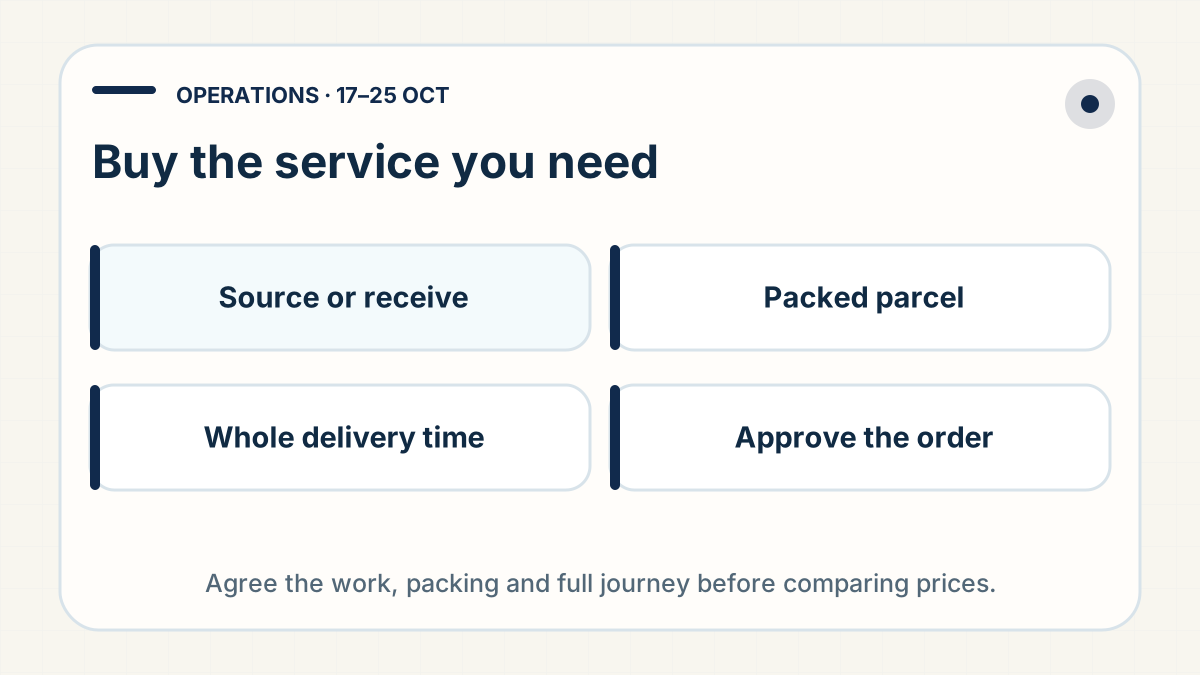
Choose the job you need before comparing fulfilment prices. Finding a new factory, receiving goods from your chosen supplier and preparing branded parcels involve different work. A price helps only when it covers the work your store needs.
During 17–25 October 2026, sellers needed to settle supplier handovers, packing work and delivery estimates before committing to a launch.
Do you need sourcing or fulfilment of your own stock?
Start your brief with the service you want. If you already chose a supplier, say whether the agent should buy from that supplier or receive goods you purchase yourself. Name who prepares each customer parcel and who supplies its packaging. This keeps a search for new products from taking over a request for receiving and shipping.
You can also separate the jobs. Your supplier may make and pack the goods while a fulfilment partner receives and dispatches them. Agree that handover before anything moves; the own-supplier intake guide sets out what each side needs to confirm.
What will your supplier deliver to the warehouse?
Describe the finished parcel, not just the product. The warehouse needs to know what arrives together, what belongs to an individual customer and what still needs packing. Include clear product and packaging photos, the packed size and gross weight, and the destination countries. If the supplier has not finished the package, say which details remain estimates.
Agree the arrival check too. Counting incoming goods and looking for visible damage differs from testing a function or checking every unit. Name the photo, dimension or function your decision depends on. The warehouse arrival checklist helps you ask for the right check before the carton leaves your supplier.
Which steps come before international shipping?
Build your launch date from the whole journey. Purchase or production comes first, followed by movement to the warehouse, agreed checks and packing, then international transit. A faster shipping service changes only the part it covers. It cannot make an unfinished product ready or remove the time your supplier needs to send it.
Ask for each part separately, including which days the supplier works. Then compare the complete estimate with the time your customer will wait. The faster-shipping guide explains why product size, contents and destination can leave you without an express option, even when you would pay more.
Would stock help your launch enough to justify buying it?
Compare the time saved with the inventory commitment. Holding a proven product closer to dispatch can remove a procurement wait. It also means paying for goods before the next customer buys them. Stock in another country adds another purchase and delivery plan; it does not make an unstocked product locally available.
Before committing, ask which exact versions you would hold, how replenishment works and what happens to slow-moving goods. Keep the first decision tied to the products you plan to sell. Dropship, pre-stock or overseas warehouse? compares those choices without treating faster dispatch as a reason to buy every variant.
Which branding job are you paying for?
Separate changing the product from changing its presentation. A factory making a custom product, a factory printing new boxes and a warehouse applying labels to existing goods may each need a different minimum and lead time. Ask for each job separately so a factory production minimum does not stand in for every possible way to start.
Choose the smallest change that gives your customer the presentation you need. Plain packing, labels, inserts and printed boxes carry different commitments. The packaging ladder helps you compare those options, including extra handling, storage and the effect of a larger parcel on freight.
What should you approve before taking launch photos?
Approve the complete presentation before using it in launch photos. Check the product, its labels, the outer packaging and anything inside together. If several versions share similar packaging, specify which label belongs to each version. Ask how old branding will look after replacement; covering one surface does not settle the rest of the parcel.
Use a sample to settle the points that pictures cannot answer. Confirm what the supplier or warehouse will photograph and what you need to inspect yourself. The private-label approval checklist connects artwork, physical samples and the finished packing before production or dispatch.
Which details need confirmation before you approve the order?
Keep the quote beside the service brief. If a price changes, compare the same product, quantity, packing, destination and shipping service before approving the revised total. The landed-price quote guide explains those checks. Keep recipient details alongside them; the checkout address guide helps you resolve missing or rejected fields before dispatch.
What to carry into next week
Prepare two documents. Put the product, service required, destination, packing choices and complete delivery estimate in one brief. Keep an order exception list beside it: what needs to wait, which detail needs correcting, who must answer and what confirmation lets that order move. Update each separately so a new product quote does not hide a live customer issue.
Use the brief to compare the next offer and the list to finish the work already under way. The open-action guide shows how to keep each next step clear until the person responsible confirms it.