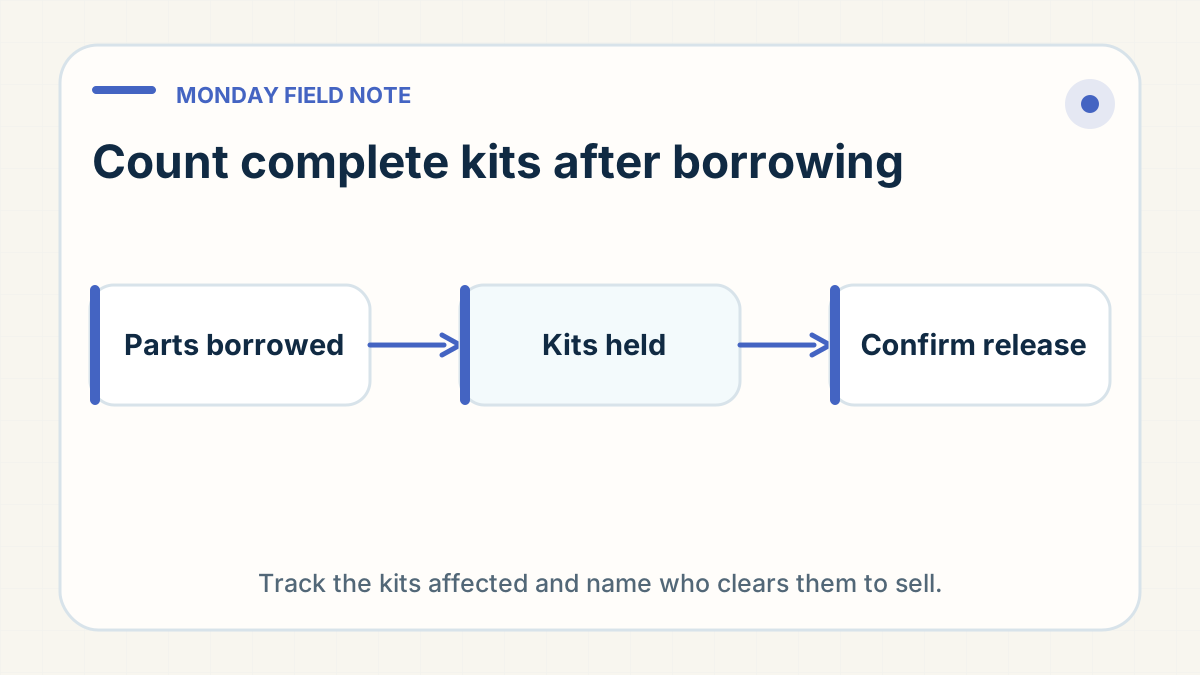
Field note
If you borrow parts from a complete kit, reduce the kits you can promise immediately. A main item still on the shelf cannot fulfil the original offer without its included accessories. Agree the effect on your next kit order before you approve the current workaround.
Which kits lose their included parts?
On Monday, a seller proposed using parts from other complete kits to fill an order with extra refills. Loose refills were unavailable. The seller also asked to buy replacements for the kits supplying those parts. That proposal addressed the waiting order, but created another packing job before the donor kits could ship whole.
Use a stock sheet to name the donor kits, the missing component and the replacement purchase. Keep those kits out of the complete-kit count while their contents fall short. You can hold them separately or mark their shelf location clearly. Agree the method with whoever prepares the next pick.
Ask the warehouse to confirm the complete-kit count after the transfer. Do this before accepting another order against the old total. If you cannot hold the donor kits reliably, compare waiting for loose refills with sending the current order in separate parcels. Agree the customer promise before choosing either route.
Does each accessory match an item or a pack?
A separate seller checked an accessory purchase against single and double packs. Staff calculated one accessory per double pack, and the seller reduced the proposed purchase. It did not involve borrowing parts from kits. The shared question was which complete offers the available components could support.
For a generic double pack, one accessory per pack means you count packs before buying accessories. Counting main items instead can buy more than the current pack plan needs. Put single packs and double packs on separate rows. Show the included accessory beside each, then calculate the purchase from the mix you intend to ship.
Keep a later stock purchase on a separate line. Future main items may justify extra accessories, but they do not increase the complete packs available today. Ask the person placing the purchase to separate immediate packing needs from that later top-up.
Who puts the donor kits back into the sale count?
Name the warehouse contact who will check the donor kits after replacements arrive. Ask for the missing parts, the expected arrival date and the complete-kit count after repacking. An arrival update starts that check; it does not tell you that someone has restored every kit.
The bundle and free-gift checklist covers component lists and stock choices. Add a named owner for this temporary exception: who holds the donor kits, and who confirms their contents before you offer them again?