- 01Order becomes visible
- 02Product and address checked
- 03Parcel reaches release milestone
- 04Usable tracking returns
The situation
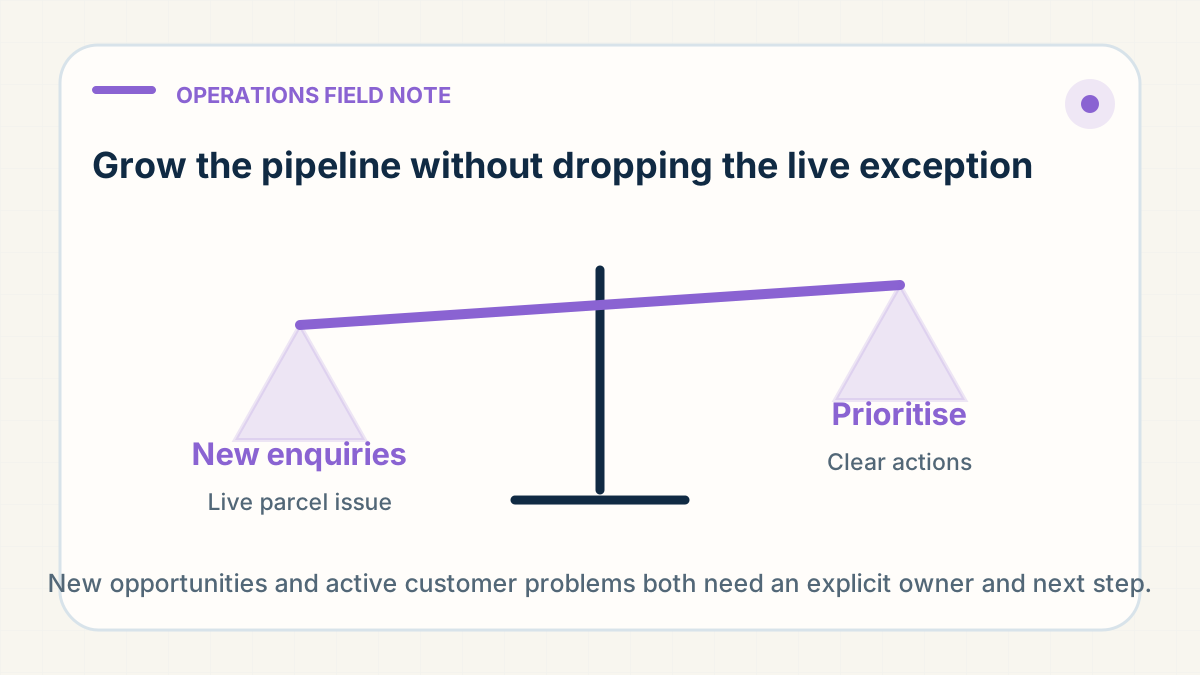
This field note is drawn from a real operational pattern, with identifying details removed. The immediate issue was: Three cold inquiries landed in one morning — cooling gadgets, a foot massager, drone parts — while an older shipment got caught by the new EU rule and had to be destroyed.. The product, seller and order-specific details are deliberately broad, but the decision process is the same one a growing store needs to make.
Some mornings the inbound just doesn't stop. Within about twenty minutes of each other today, three completely different people reached out cold looking for a sourcing and fulfillment partner: one building a new brand around summer cooling gadgets — think portable fans, neck coolers, that whole category — another looking for a long-term agent specifically for a foot massager they wanted to sell into the German market, and a third running an eBay store who wanted better pricing on some fairly technical items. Totally different products, totally different people, all landing in the same short window. That's genuinely what a lot of our mornings look like — a scattershot of "is this thing possible" messages before anyone's even had coffee.
On the existing-client side, the EU tax change from July 1st kept rippling outward. One of the harder conversations today was telling a client that a batch of their parcels — shipped before the 1st but still in transit — could no longer clear customs under the new rules and would have to be destroyed rather than delivered. Not a fun message to send. Nobody likes being the bearer of "the rules changed mid-flight and there's nothing we can do about these specific packages," but better to say it plainly than let it drag out.
We also spent a chunk of the day deep in the weeds with a beauty brand on packaging and delivery logistics — postal codes, specifically, and how different courier systems in Latin America handle addresses without one. It's a genuinely tricky problem: require a postal code and you might lose orders from customers who don't reliably have one; skip it and packages get stuck in limbo. No clean answer, just a lot of back-and-forth trying to find the least-bad option.
Ended the day feeling like we talked to twenty different businesses about twenty different problems, which, most days, is basically the job.
What it meant operationally
The operational question is usually not whether a tracking number exists, but which physical handoff has actually happened, what the next meaningful event should be, and when an exception warrants action. Separating those states keeps a customer update honest and prevents an early scan from becoming an unsupported delivery promise.
The practical takeaway
Use the current physical stage, the next expected milestone and a defined review point in every delivery update. That gives the seller and customer a useful answer without exposing parcel-specific information.
Make the quotation comparable before judging the number
- Define whether one unit means one piece, one set or one customer parcel.
- Use the intended variant, packed dimensions, scale weight, protection and destination.
- Separate product, inbound, handling, packaging, international shipping and route-specific charges.
- Recalculate after adding a gift, insert, custom box or second SKU; each can change the parcel and route.
A marketplace listing, factory unit price and all-in fulfilment quote are not like-for-like until their scope is aligned.
Want to discuss a similar order decision?
Send the product, destination and the point where you are stuck on WhatsApp (+86 178 4666 9989). We will help you work through the operational next step.
Talk to RyanFulfil on WhatsApp →